Last updated November 21, 2026
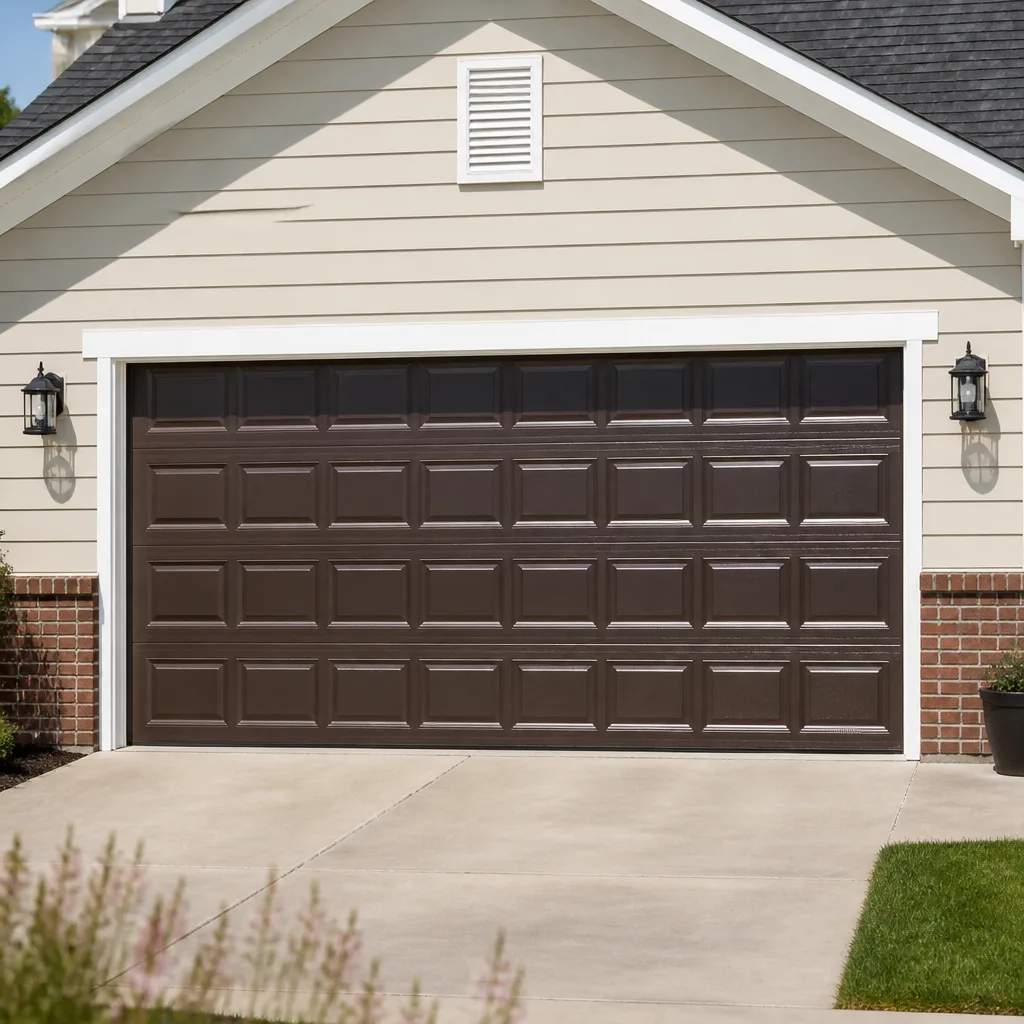 Raised-panel steel
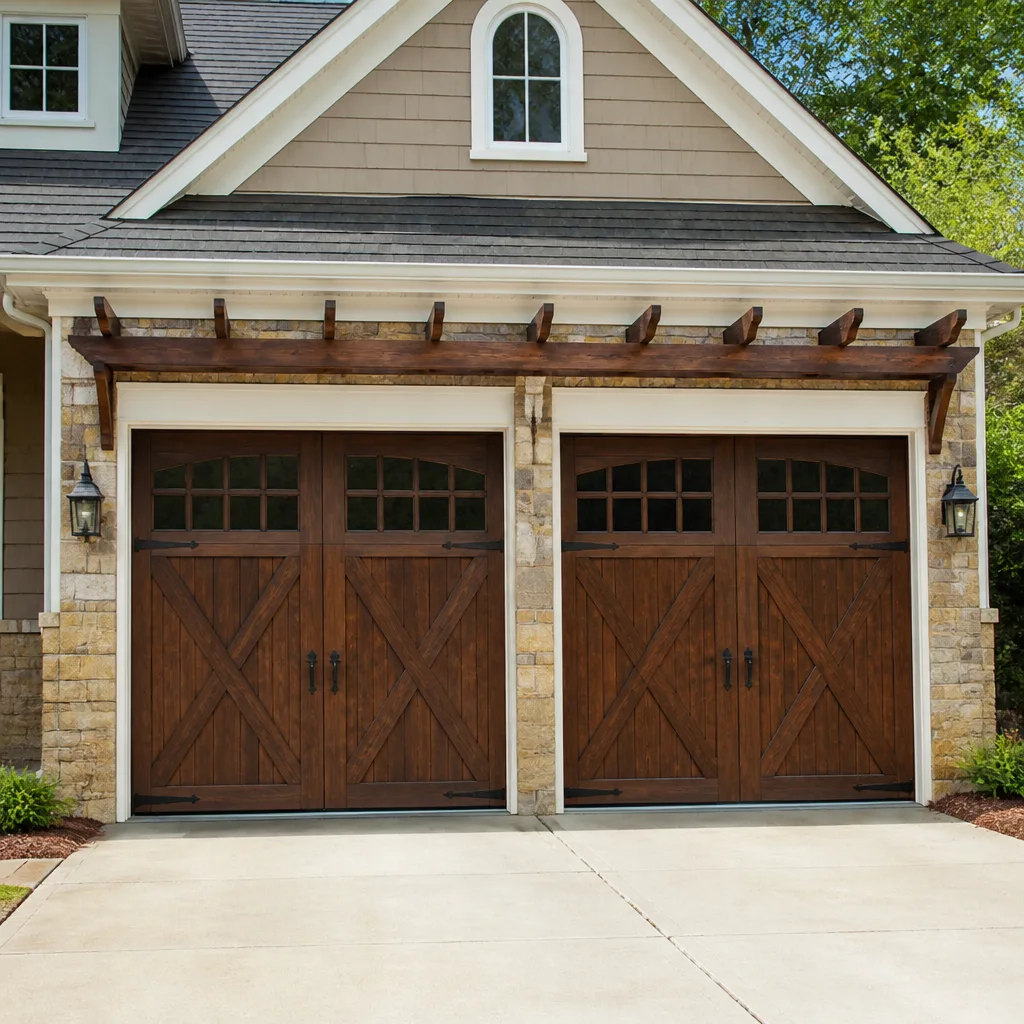 Carriage house
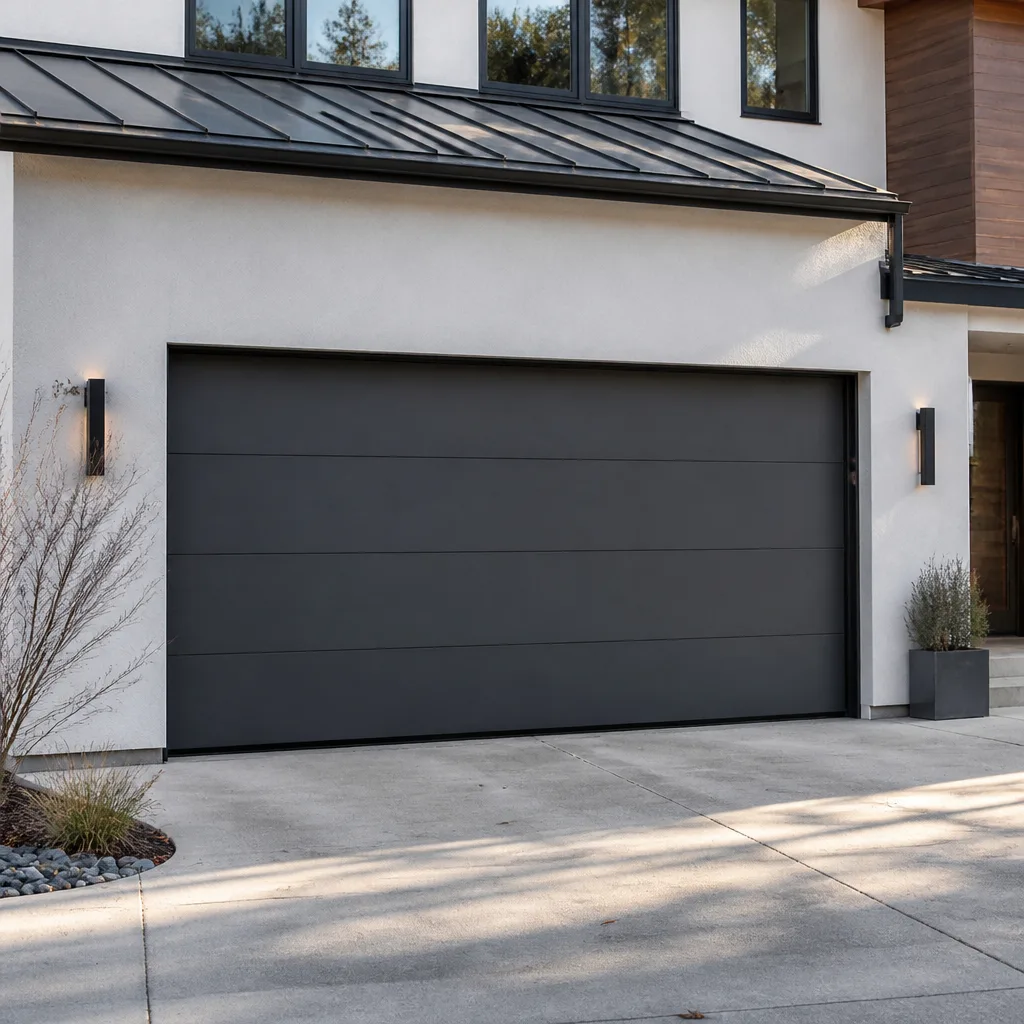 Modern flush
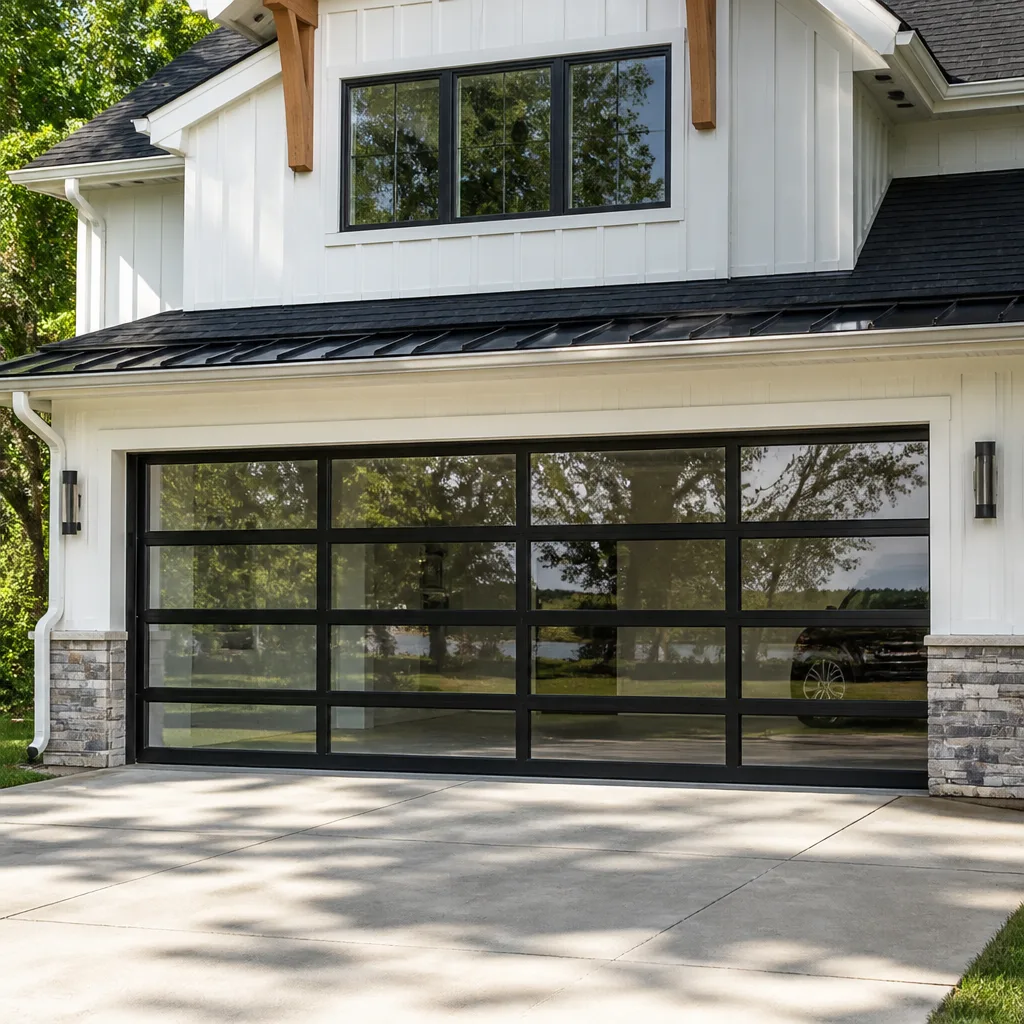 Full-view glass
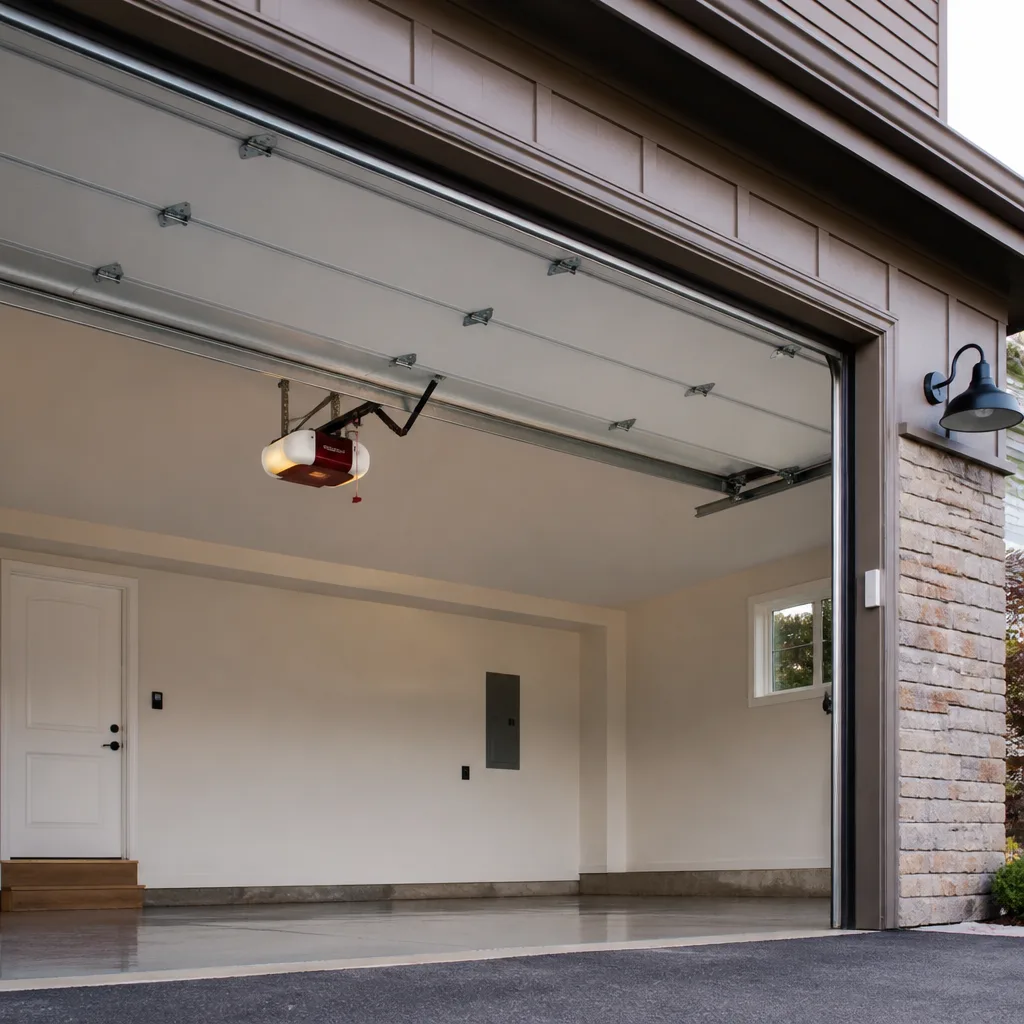 LiftMaster openers
 Chamberlain openers
Full 25-point door and opener safety check with every visit - springs, cables, rollers, tracks, and your LiftMaster or Chamberlain opener included
You get a price before we start. It does not change when the pro arrives.
Get your free estimateThe Complete Guide to Garage Doors in Greenville
Your garage door is the largest moving mechanical object in your home, and most people can’t name three of its parts. That gap in knowledge is exactly why small problems turn into expensive ones. A door that shudders on the way down isn’t just noisy; it’s telling you a roller is binding or a cable is fraying, and ignoring it wears out the opener motor. A single clicking sound at the top of the travel can mean a spring is about to let go. In this guide, we map the seven components of a garage door system, explain how Greenville’s humidity and freeze-thaw cycles stress each one, and show you how to read your door’s condition in ten minutes so you can decide between a small repair and a full replacement.
Quick Answer
A garage door system is seven interconnected components – springs, cables, rollers, hinges and tracks, panels, the bottom seal, and the opener – and a problem in one accelerates wear in the others. The right call between a $200 repair and a $1,400 replacement depends on the age and condition of the whole system, not just the part that failed. In Greenville, humidity and freeze-thaw swings make spring fatigue and track misalignment the two most common issues we see.
Styles & brands we work with
- Raised-panel steel
- Carriage house
- Modern flush
- Full-view glass
- LiftMaster openers
- Chamberlain openers
Table of Contents
- The Seven Parts of Your Garage Door System
- How the Components Work Together
- How New Jersey’s Climate Stresses Each Component
- How Long Each Part Actually Lasts
- Repair vs. Replace: How to Decide
- The 5-Point Home Inspection You Can Do in 10 Minutes
- Choosing and Maintaining Your Opener
- What Garage Door Work Costs in Greenville
The Seven Parts of Your Garage Door System
A garage door has seven core components that all work in tension with each other. When one wears, the others compensate – and that compensation is what causes secondary failures. Understanding this is the difference between fixing the real problem and chasing symptoms.
Here’s the breakdown, from top to bottom:
- Torsion springs. The two coiled springs mounted above the door on a steel shaft. They store the energy that counterbalances the door’s weight, meaning your opener only has to lift a fraction of the actual load. They are the single most dangerous component to work on, which is why spring repair is a specialist job rather than a general handyman task.
- Cables. Aircraft-grade steel cable running from the bottom bracket up to the spring drum. Cables carry the tension; when they snap, the door can drop without warning.
- Rollers. Ten to twelve rollers that ride inside the vertical and horizontal track, letting the door travel smoothly. Worn nylon or steel rollers cause the shimmy and rattle most homeowners notice first.
- Hinges and tracks. The hinges connect door sections; the tracks guide them. Both take a beating from misalignment, impact, and temperature movement.
- Panels. The four to five sections that make up the door face. Panels carry the load, provide insulation, and take the cosmetic brunt of any impact.
- Bottom seal. The rubber gasket along the bottom edge. It seals against water, drafts, and pests, and is the most common source of drafts in a Greenville-area garage.
- The opener. The motor and rail assembly that drives the door up and down, with safety sensors and (on modern units) smartphone control through systems like LiftMaster’s myQ ecosystem.
Each part has its own lifespan, its own failure signature, and its own cost to repair. The trick is knowing which failures are standalone and which are symptoms of a system that’s already out of balance.
How the Components Work Together
The garage door system is a counterbalance in motion, and the springs sit at the center of it. Here’s what’s actually happening every time the door moves:
- The opener motor pulls or pushes the door along the rail, but only after the springs have “pre-loaded” the door’s weight.
- The torsion springs unwind slightly as the door rises, releasing stored energy that offsets gravity on the door panels.
- The cables transfer that counterbalance force from the spring drum down to the bottom bracket, keeping both sides of the door in sync.
- The rollers ride inside the tracks, guiding each panel as it rotates from vertical travel to horizontal travel through the curved section.
- The hinges flex at the joints between panels, allowing the sections to bend around the radius of the track.
- The bottom seal compresses against the floor slab at the closed position, blocking water, cold air, and insects.
- The safety sensors monitor the doorway opening and reverse the motor instantly if anything crosses the beam.
When a spring weakens, the opener suddenly has to lift more weight than it was designed for. When a cable stretches, the door hangs unevenly and the rollers bind. When a roller seizes, the opener motor overloads. Every component is connected, which is why we start every diagnosis with the whole system rather than the part the homeowner called about. At Greenville Garage Door Repair Pros, that systems-first approach is why we handle opener repairs, spring replacements, panel repairs, and full new installations under one roofline – no need to source a second contractor halfway through.
How New Jersey’s Climate Stresses Each Component
Greenville’s climate is not gentle on garage door hardware. The combination of humid summers and sharp freeze-thaw cycles through the winter creates a specific wear pattern that’s different from what you’d see in a dry climate or a mild one.
Humidity and Summer Moisture
Summer humidity is the primary driver of corrosion on bare steel components. Cables, torsion springs, and steel hinges all shed their factory oil coating over time, and once that protective layer is gone, humidity does the rest. That’s why we recommend an annual visual inspection of the cable ends and spring coils every spring. Rollers also swell slightly in humid weather, which is why doors that worked fine in April sometimes start binding by July.
Freeze-Thaw Cycles
Winter is harder on the tracks and the bottom seal. Moisture works into the joints at the track mounting brackets, freezes overnight, and expands – slightly shifting the track each time. Over a season, tracks that were perfectly plumb in October may be out of alignment by February. The bottom seal stiffens in cold weather too, losing its flexibility and its seal. Torsion springs also become more brittle in cold temperatures; a spring that’s within a few thousand cycles of failure is more likely to actually snap on the first cold morning of the year than in the middle of summer.
What This Means for Greenville Homeowners
In our experience working on Greenville doors, the practical takeaways are simple: check the door’s balance and alignment in early spring, before the summer humidity arrives; check the seal and tracks again in early fall, before the first hard freeze. That two-check rhythm prevents most of the emergency calls we get.
How Long Each Part Actually Lasts
Actual service life is a function of cycles, not years – and cycles vary wildly from home to home. A door that runs four times a day lives much longer than one that runs fifteen times a day. Here’s what typical use looks like, cycle-only:
- Torsion springs: anywhere from 7,000 to 20,000 cycles depending on the spring grade. Standard residential springs in Greenville tend to sit in the lower half of that range because of the climate stress described above. High-cycle springs are available for doors that see heavy daily use.
- Cables: generally 10,000 to 15,000 cycles before the strands start to fray. Usually replaced alongside the springs because a new spring on a stretched cable is a false economy.
- Rollers: nylon rollers last longer than steel. Replacement is typically the cheapest single repair on the whole door.
- Hinges: the hinges at the middle of the door (connecting the two moving sections) wear fastest. They usually show noticeable play before they fail outright.
- Tracks: tracks don’t wear so much as they deform. As long as the door hasn’t been hit and no one’s tried to force a jammed door open, tracks can last the full life of the door.
- Panels: panels are cosmetic on the low end and structural on the high end. A panel with a crack in the frame or a bent hinge-point is not cosmetic; it’s a structural failure.
- Opener: chain and belt drive openers are typically at end of life somewhere between 10 and 15 years of normal use. Modern units with LiftMaster or Chamberlain connectivity usually last longer than the legacy Craftsman units still running in older Greenville garages.
- Bottom seal: every 3 to 5 years. Cheapest part on the door and one of the most impactful for comfort.
None of those are hard limits. A well-maintained door routinely beats them, and a neglected door often fails early.
Repair vs. Replace: How to Decide
The repair-vs-replace question is the single biggest financial decision in garage door ownership, and it almost never has to do with the part that just broke. It’s about the whole system.
Here’s the rule of thumb we use in Greenville:
- Single-component repair is the right call when the door is younger than 10 years old, the other components pass a visual inspection, and the failure is isolated – a worn roller, a snapped cable, a failed opener motor.
- Repair-plus-preventive-maintenance is the right call when the door is between 10 and 15 years old and the springs have just gone but the panels are still solid. Replacing springs and cables together while the technician is already on-site is almost always cheaper than two separate visits months apart.
- Full replacement is the right call when panels are structurally compromised, the frame around the opening is damaged, or the door has already had two or more spring failures in its lifetime. That last one is the biggest signal: once a system has cycled through multiple spring failures, the tracks, rollers, and hinges are usually on borrowed time too.
- False economy is what happens when you fix the opener because it’s “the thing making the noise” while ignoring the tired springs behind it. A new opener on a fatigued spring system is a motor working overtime against a load it wasn’t designed for – the motor will fail again within a year.
When homeowners call us about a single broken part, we ask two questions before we quote anything: how old is the door, and has anything else gone wrong in the last two years? That usually tells us more than a visual inspection alone.
If you’re not sure yet, garage door repair is usually the right first call, and a technician can tell you at the free estimate whether the rest of the system is worth keeping.
The 5-Point Home Inspection You Can Do in 10 Minutes
You don’t need tools for this. You need ten minutes and a willingness to look closely. Here’s the inspection we recommend every Greenville homeowner do twice a year:
- Balance test. Close the door, then use the manual release to disconnect the opener. Lift the door halfway by hand. It should hold roughly in place with minimal effort. A door that drops is a spring problem; a door that’s hard to lift is a tension or track problem.
- Visual spring check. With the door closed, look at the torsion springs above the door. A healthy spring looks like a clean coil. A spring with any visible gap – even a tiny one – has failed or is failing. Do not touch it. Call a professional. This is not a DIY component.
- Cable check. Look at the two steel cables running down the sides of the door. They should be taut and clean. Any fraying, rust, or slack in either cable is a stop-using-the-door signal.
- Roller and track check. Look at each roller; a worn roller is dull, flat-sided, or cracked. Run your hand (carefully) along the inside of the vertical track; if it feels rough or has any visible bends, the door isn’t tracking properly.
- Seal and weather check. With the door fully closed, look at the bottom seal from inside. Any visible daylight between the seal and the floor means water and cold air are getting in. That’s an easy replacement and often improves the garage’s comfort dramatically.
If any of those five checks flags a problem, stop operating the door and have it inspected. A failing cable or track is dangerous. This is a good moment to call a professional, because the alternative is a door that comes off its tracks while you’re underneath it.
Choosing and Maintaining Your Opener
The opener is the part homeowners think about most, but it should really be the last thing you upgrade. A perfectly fine opener on a properly balanced door is quiet, smooth, and long-lived. A top-of-the-line opener on a fatigued door is working against itself every cycle.
Opener Types and What Fits a Greenville Home
Three opener types dominate the residential market:
- Chain drive: the classic. Durable, inexpensive, louder than the alternatives. Still the right choice for many detached garages and older homes.
- Belt drive: quieter, smoother, the standard upgrade for attached garages where noise carries into the house.
- Smart openers: units with built-in WiFi and smartphone control. The dominant platforms are LiftMaster and Chamberlain’s myQ ecosystem; both let you check door status, close the door remotely, and receive alerts if it’s been left open.
For legacy openers, Craftsman and Genie units still running in older Greenville homes are common, and parts and repairs are usually available. We typically recommend upgrading a legacy opener only when it’s faulting repeatedly or when the safety sensors can no longer be adjusted reliably.
Maintenance That Actually Matters
Opener maintenance is really door maintenance. Lubricate the door’s hinges and rollers yearly with a garage-door-specific lubricant, keep the tracks clear of debris, and re-test the safety sensors every few months by placing an object in the beam path and confirming the door reverses. If you want to skip the guesswork, garage door opener repair is a standalone service and worth calling when you hear a new noise or the door stops responding to the remote.
What Garage Door Work Costs in Greenville
Costs vary by door size, brand, and the condition of the surrounding system, but here are the typical ranges we see quoted to Greenville homeowners for the most common jobs. The written estimate sets the final price, so treat these as ballpark ranges to plan around rather than a quote:
- Torsion spring replacement (one spring): $180 to $340 typical, depending on spring grade and access.
- Torsion spring replacement (matched pair): roughly twice the single-spring price, since pairs are almost always replaced together to keep the door balanced.
- Cable replacement: $150 to $250 typical.
- Roller replacement (full set): $120 to $200 typical.
- Opener repair: $130 to $280 typical for common repairs.
- Full opener replacement: $350 to $700 typical, depending on drive type and smart features.
- Panel replacement: varies widely with door brand and panel style, since Clopay, Amarr, Wayne Dalton, and Raynor each use different panel profiles.
- Full new-door installation: $1,100 to $2,800 typical for a single-car door, more for double doors or premium materials.
Two things worth noting about pricing. First, if you’re being quoted for a single spring but the technician tells you the other is fine, ask how they know – in our experience, on a door that’s been in service for years, the second spring is usually close to failure too. Second, full-door replacement includes installation, but repair and installation are different services with different scheduling: repairs are often same-day, installation requires measuring and ordering first. If you’re replacing the door, garage door installation is a scheduled job with a written estimate before any work begins, not a same-day repair.
Common Mistakes to Avoid
- Assuming the opener is the problem when it’s almost never the opener. The opener motor is the most reliable part of the system; what usually fails is the spring, cable, or a bound roller. New openers installed on tired doors fail fast.
- Replacing one spring when the other is the same age. Springs almost always fail as a pair. Replacing one leaves the older one to fail a few months later, on a door that just had a technician out.
- Forcing a jammed door. If the door won’t open cleanly, don’t pull harder. Forcing it bends the tracks and can dislodge a cable – turning a $200 repair into a full-track job.
- Lubricating with the wrong product. WD-40 is not a garage door lubricant; it’s a water displacer and it attracts grime. Use a garage-door-specific lubricant.
- Trusting a general handyman on spring work. Torsion springs are under extreme tension and can cause serious injury if released improperly. This is one of the few home repairs that carries real risk. Call a specialist.
- Ignoring the bottom seal. A five-dollar-per-foot seal replacement fixes more drafts than most insulation upgrades and takes under an hour.
- Skipping the twice-a-year inspection. The single biggest cost driver on a garage door is failing to catch problems in the window between “warning sign” and “failed part.” A ten-minute visual check twice a year prevents most emergency calls in Greenville.
See the difference
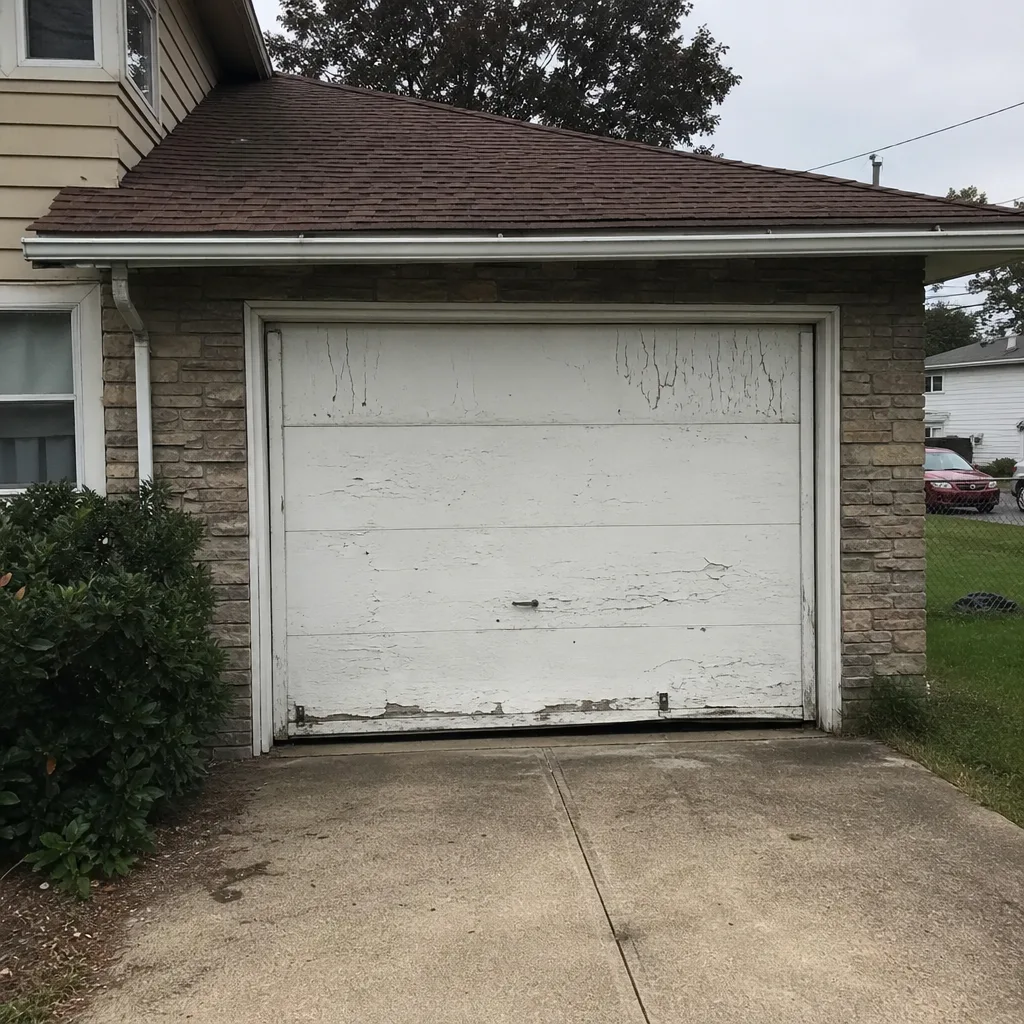 Before
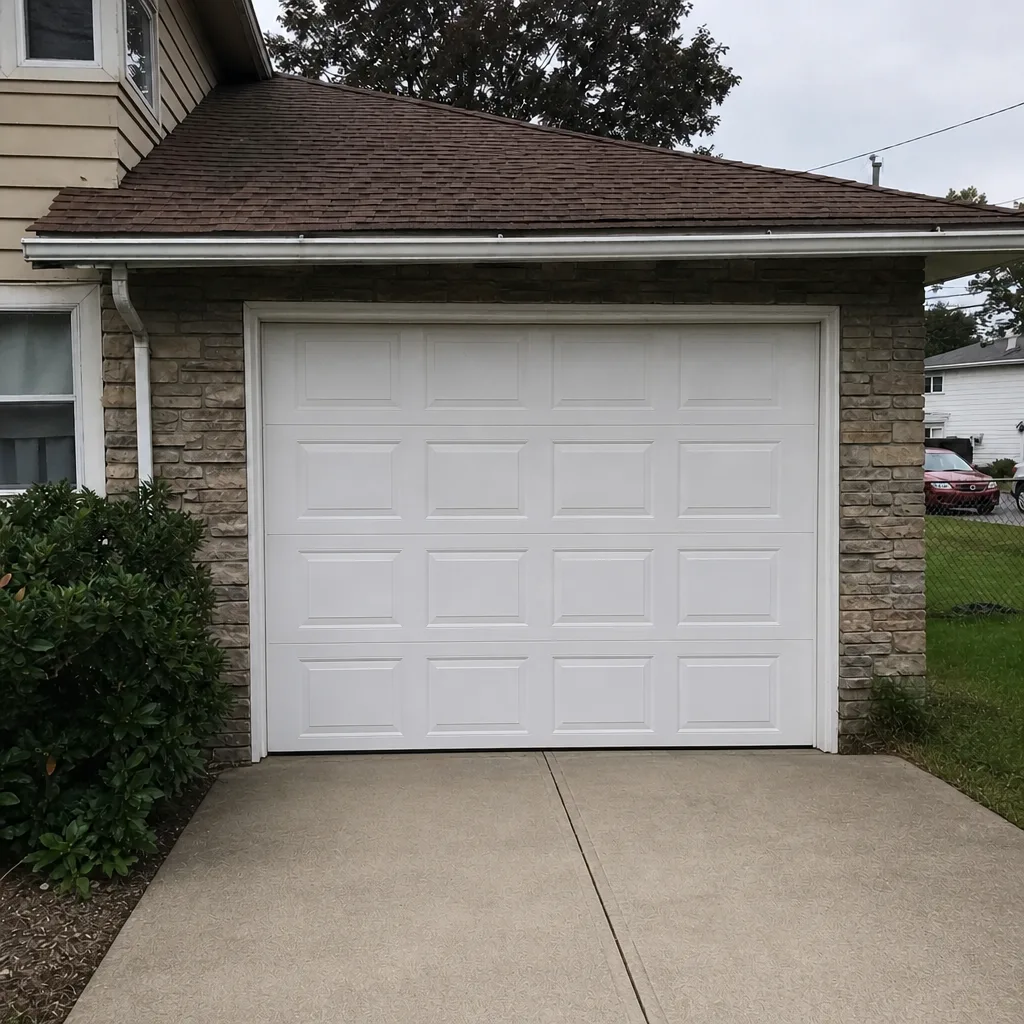 After
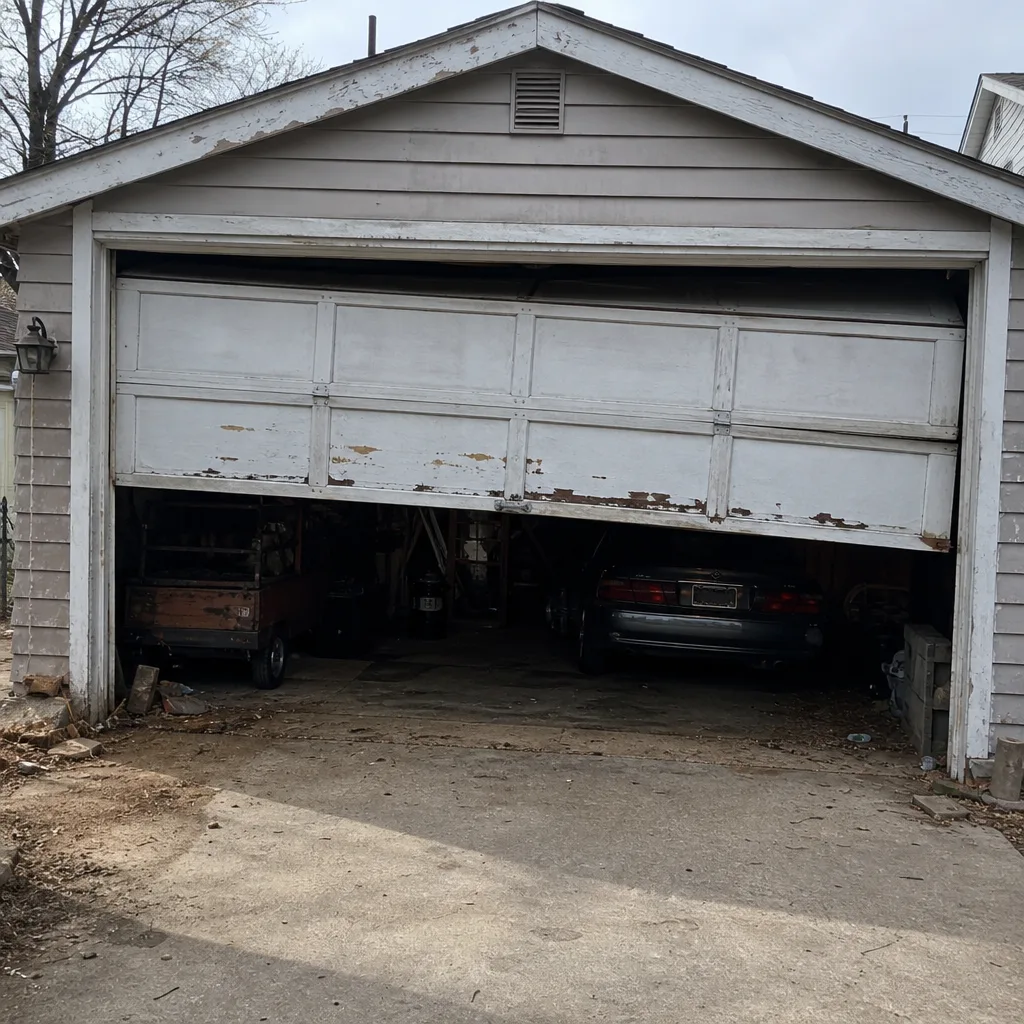 Before
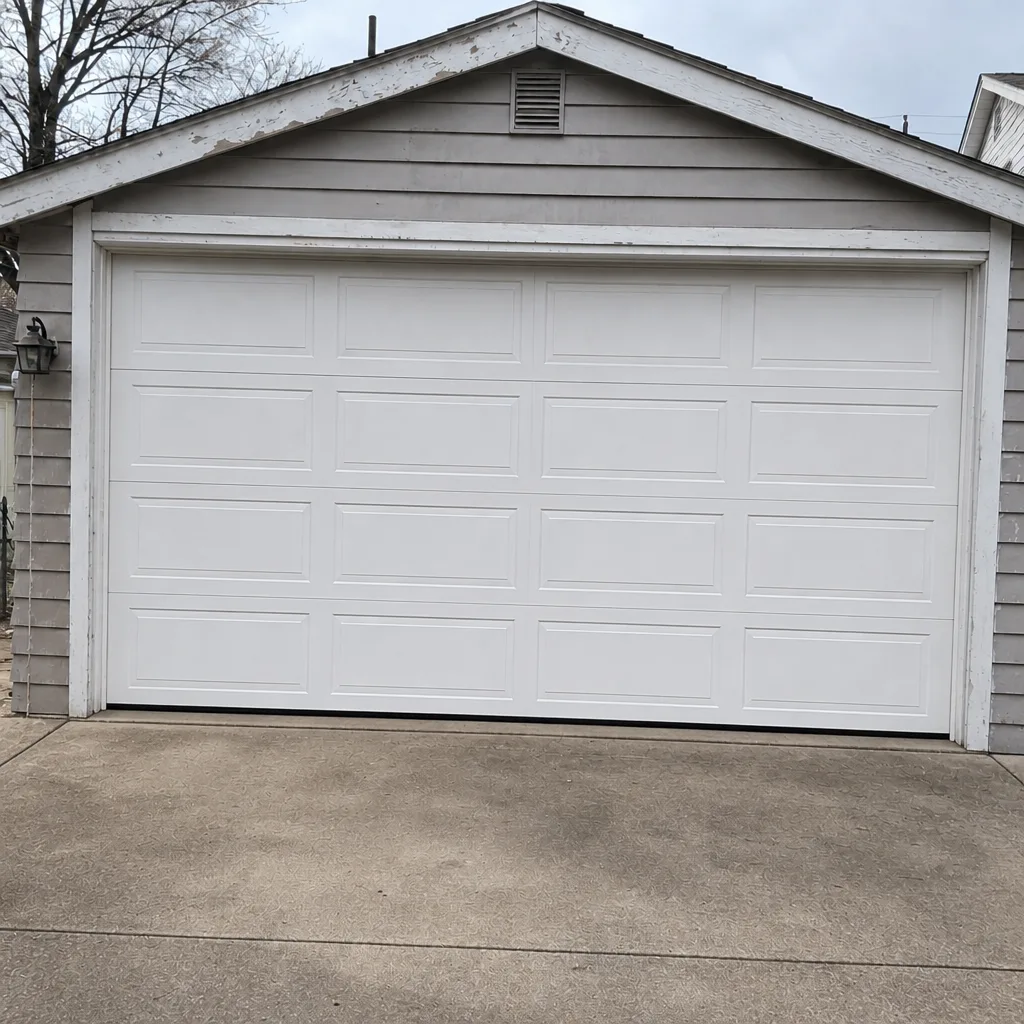 After
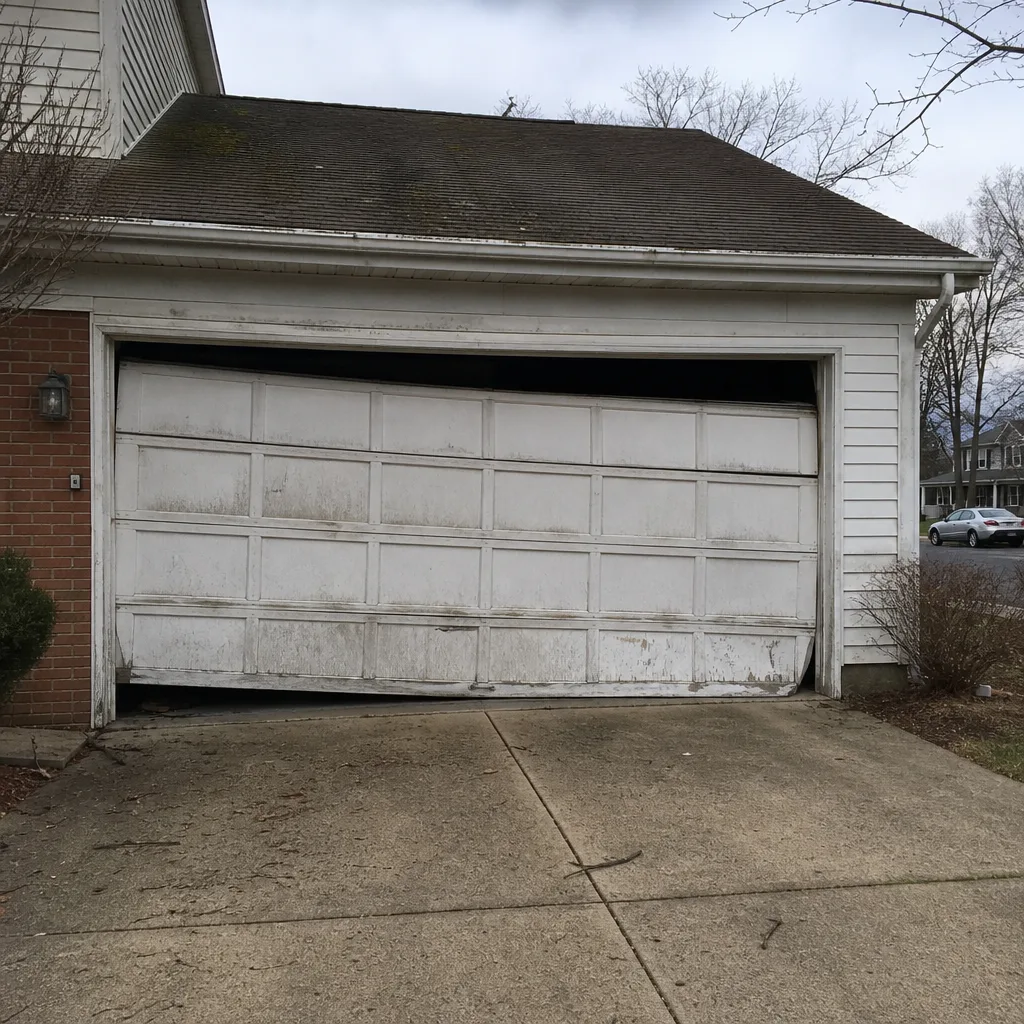 Before
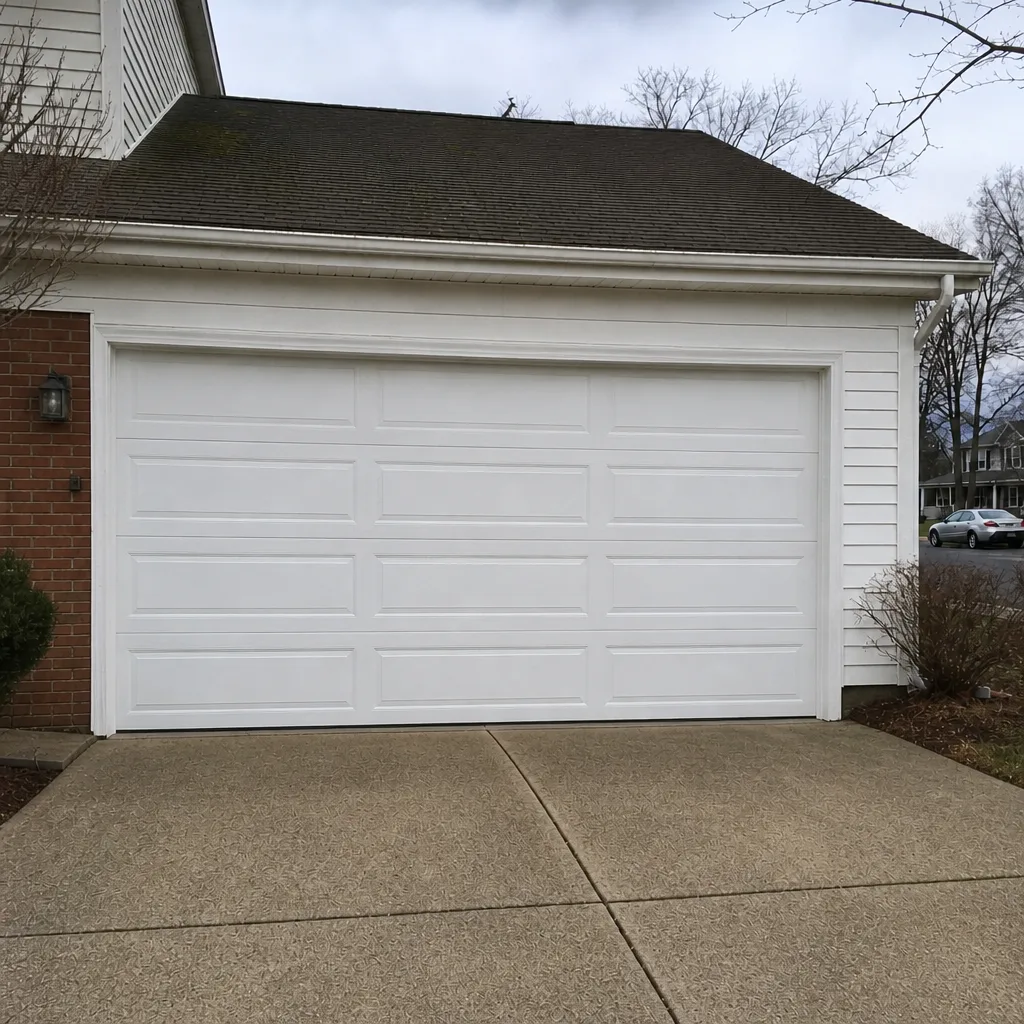 After
When to Call a Professional
Some garage door issues are genuinely DIY-friendly – replacing the bottom seal, changing batteries in a remote, lubricating hinges and rollers. Most aren’t. Call a professional if you see a gap in the torsion spring, a frayed or slack cable, a door that hangs unevenly, a door that reverses without obstruction, or a panel with any crack in the frame. Call immediately if the door has come off its tracks or won’t close completely. Springs and cables are the two components you should never touch yourself; the stored tension in a torsion spring is enough to cause serious injury in a fraction of a second. If you’re not sure whether your current issue is dangerous or cosmetic, err on the side of calling. Greenville Garage Door Repair Pros offers free estimates in Greenville – call (855) 706-3964 and we’ll walk you through what’s going on before you touch anything.
Frequently Asked Questions
Typical residential springs last somewhere between 7,000 and 20,000 cycles depending on grade, with Greenville’s humid summers and freeze-thaw winters pushing standard springs toward the lower end of that range. A door that opens four times a day will see a spring failure every several years, while a door used far more often can fail within half that time. Replacing springs in pairs keeps the door balanced and prevents a second failure months later.
No, and this is not a DIY job we’d recommend even to experienced homeowners. Torsion springs are under extreme tension and a single slip can cause serious injury. Cables carry the same load; a snapped tensioned cable can whip across the garage. Spring and cable work is the one area where calling a specialist is the safer and usually cheaper option in the long run. Call (855) 706-3964 for a free estimate if a spring has failed.
A single torsion spring typically runs $180 to $340, and a matched pair is usually about twice that. The final price depends on spring grade, access, and whether the cables need replacement at the same time. Every job is quoted in writing and agreed before any work starts, so the written estimate sets the price.
No. Every job is quoted in writing before any work starts, and that written estimate is the price. If something unexpected turns up once the technician is on-site, they’ll show you what they found and give a revised written estimate before any additional work begins. You’ll never get an invoice higher than the quote you agreed to.
The rule of thumb is that single-component repairs make sense on doors under 10 years old with sound panels, while full replacement is usually the better call when panels are structurally compromised or the door has cycled through multiple spring failures. Between 10 and 15 years, repair plus preventive maintenance is often the sweet spot. A free estimate with a technician is the fastest way to get a specific answer for your door.
We work on equipment from LiftMaster, Chamberlain, Genie, Clopay, Amarr, Wayne Dalton, Craftsman, and Raynor. Because we’re factory-familiar with those eight brands, we diagnose brand-specific issues faster than a generalist would, and we can source the right parts for older Craftsman and Genie systems as reliably as for current LiftMaster smart openers. Our technicians have up to 11 years of experience across those brands.
The Bottom Line
Your garage door is a system, not a series of parts, and treating it that way is what separates a $200 repair from a $1,400 replacement. Greenville’s climate – humid summers, sharp freeze-thaw winters – stresses every component, and the practical response is a two-minute visual spring check and a ten-minute 5-point inspection twice a year. Catch problems in the warning window, replace springs in pairs, never force a jammed door, and treat spring and cable work as a specialist job. If you’re at a decision point, call Greenville Garage Door Repair Pros at (855) 706-3964 for a free estimate. We’ll tell you what’s actually going on and quote the job in writing before any work begins.
Written by the team at Greenville Garage Door Repair Pros.