Last updated November 21, 2026
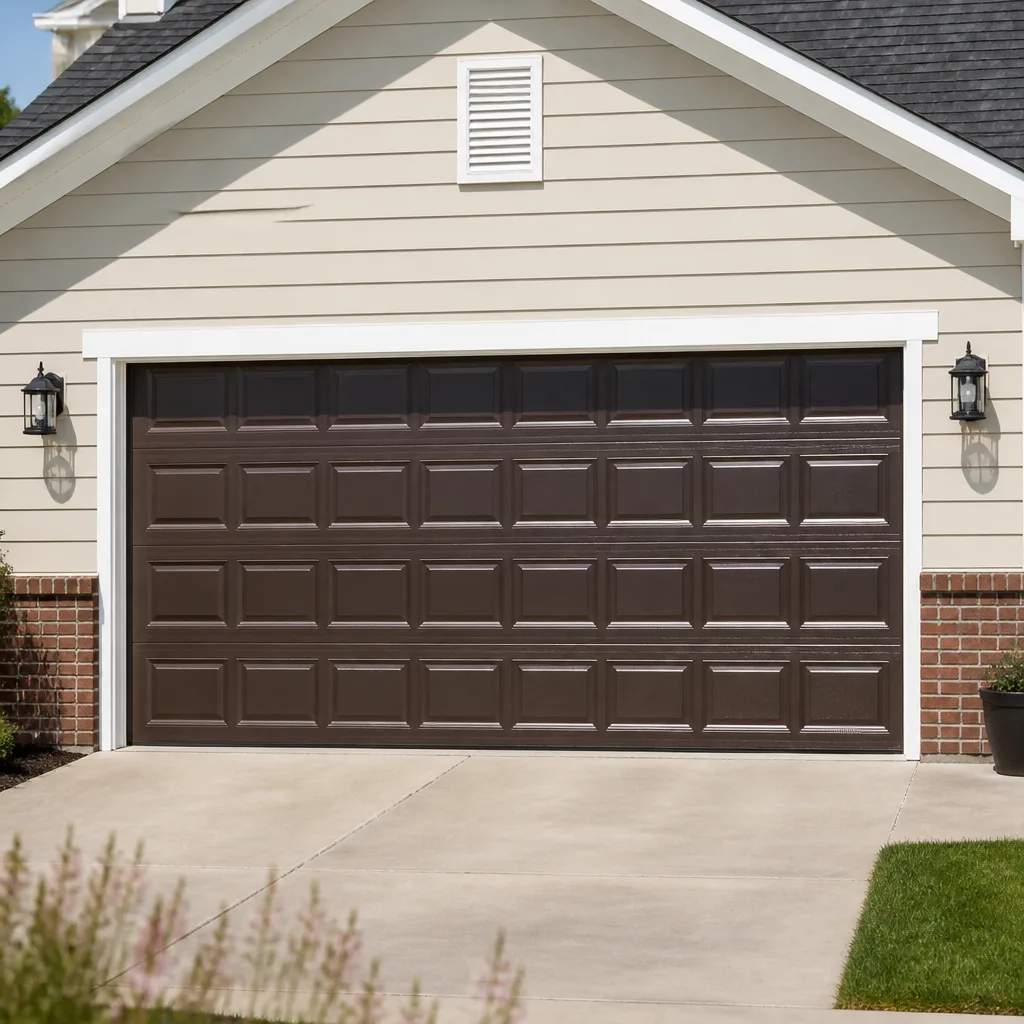 Raised-panel steel
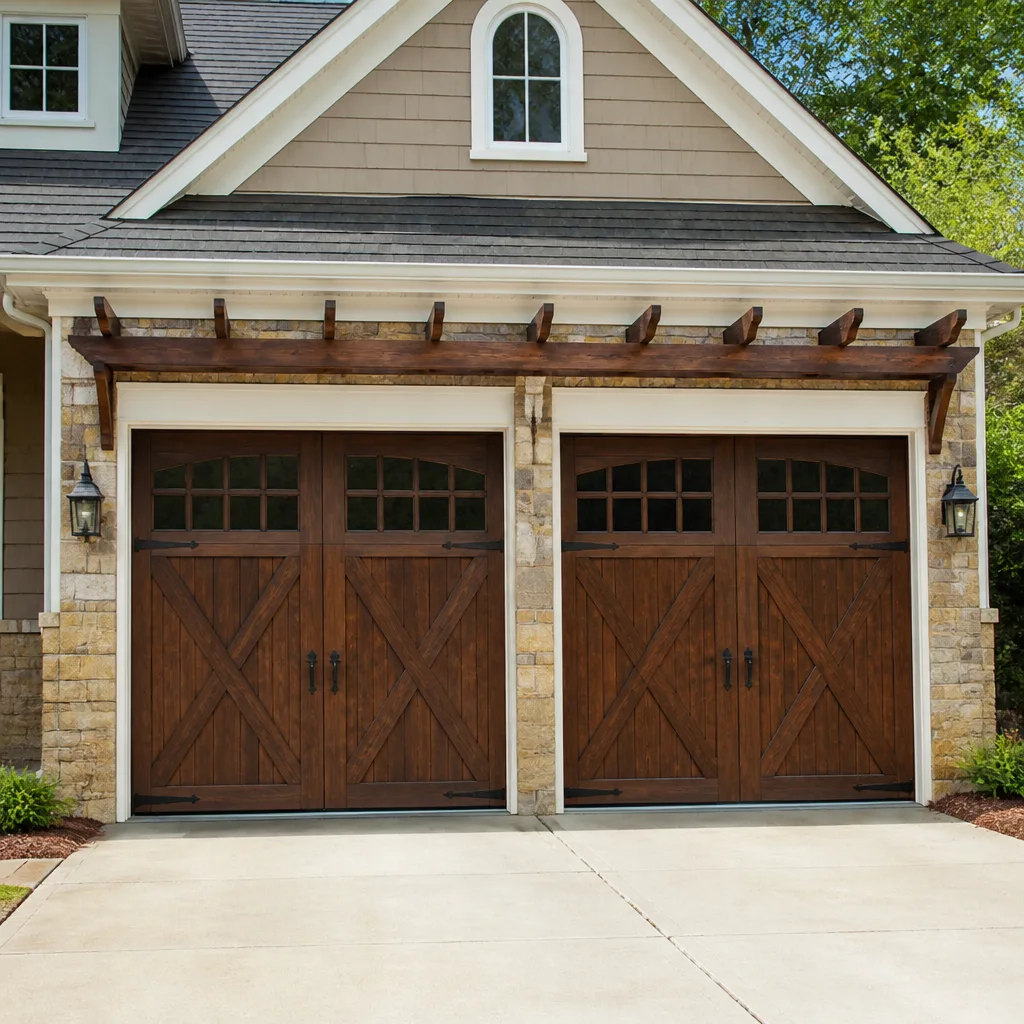 Carriage house
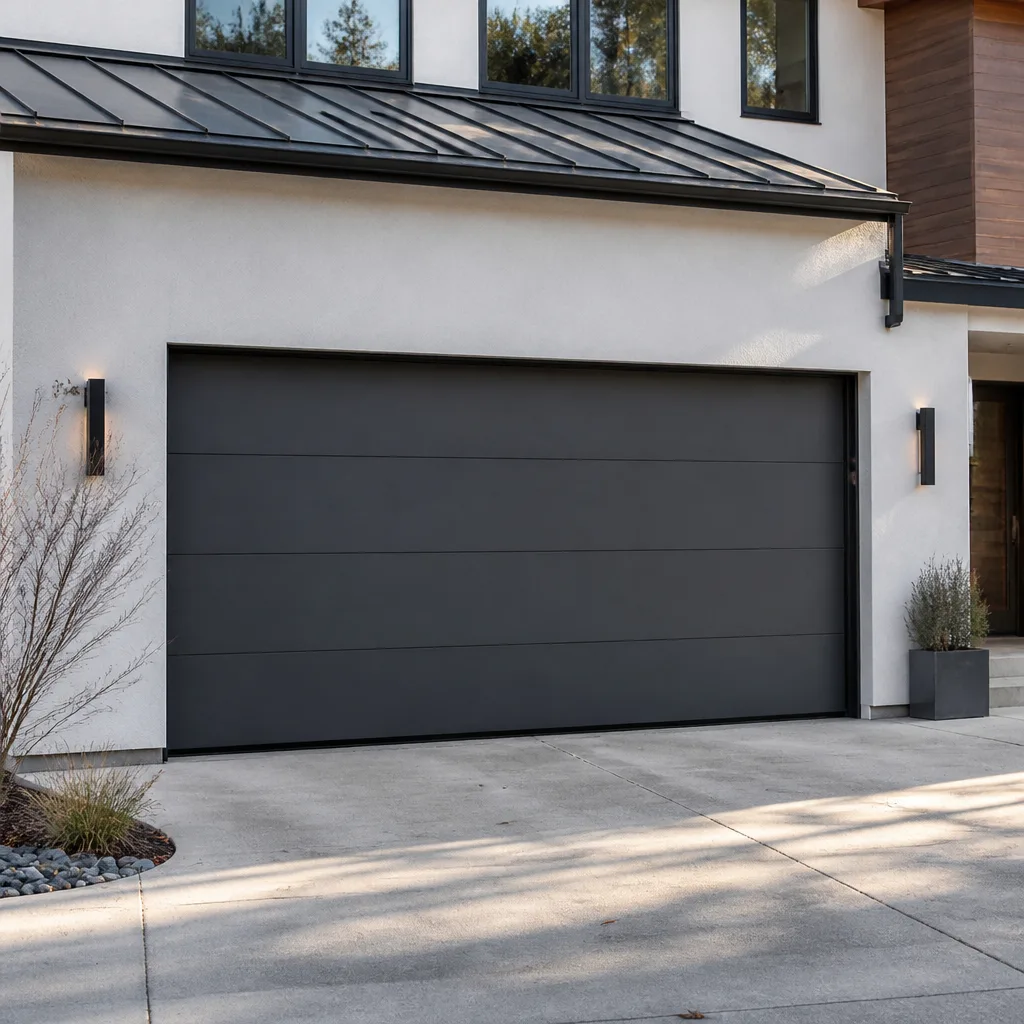 Modern flush
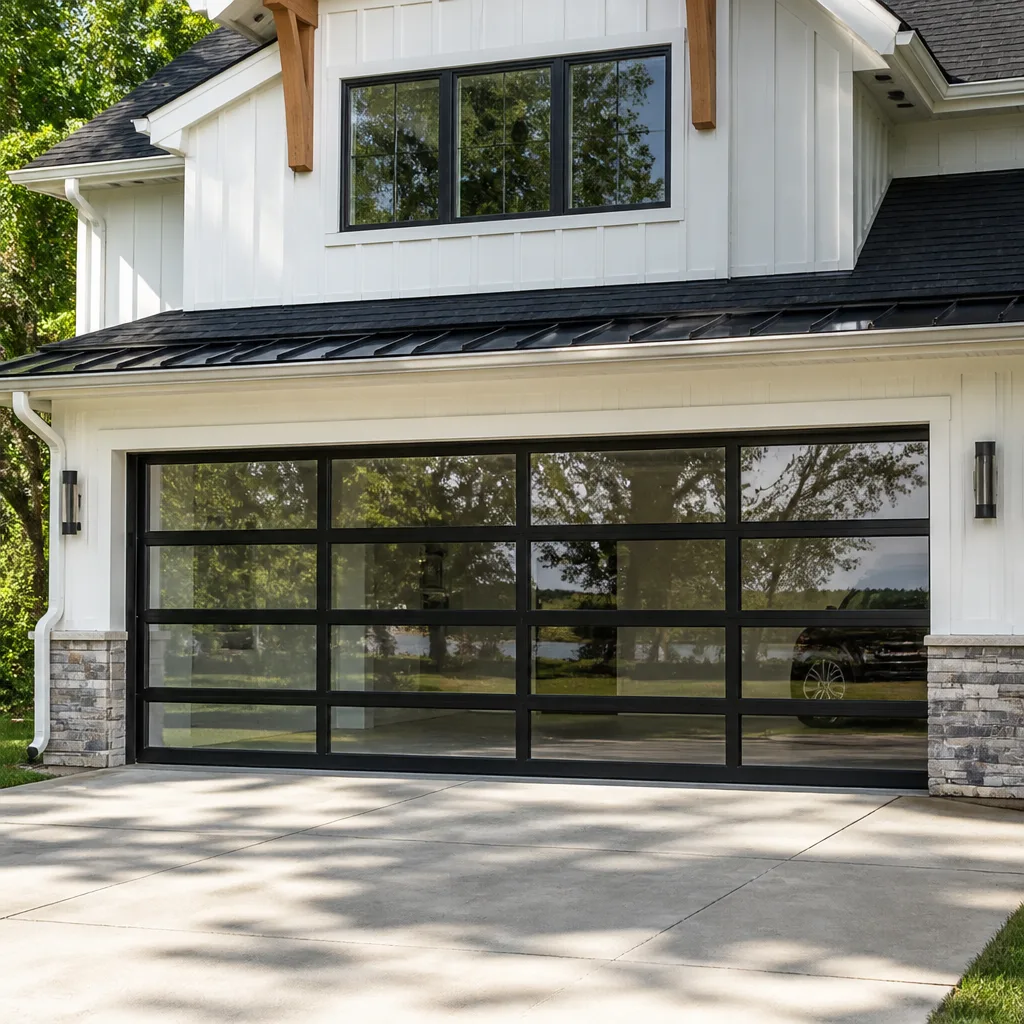 Full-view glass
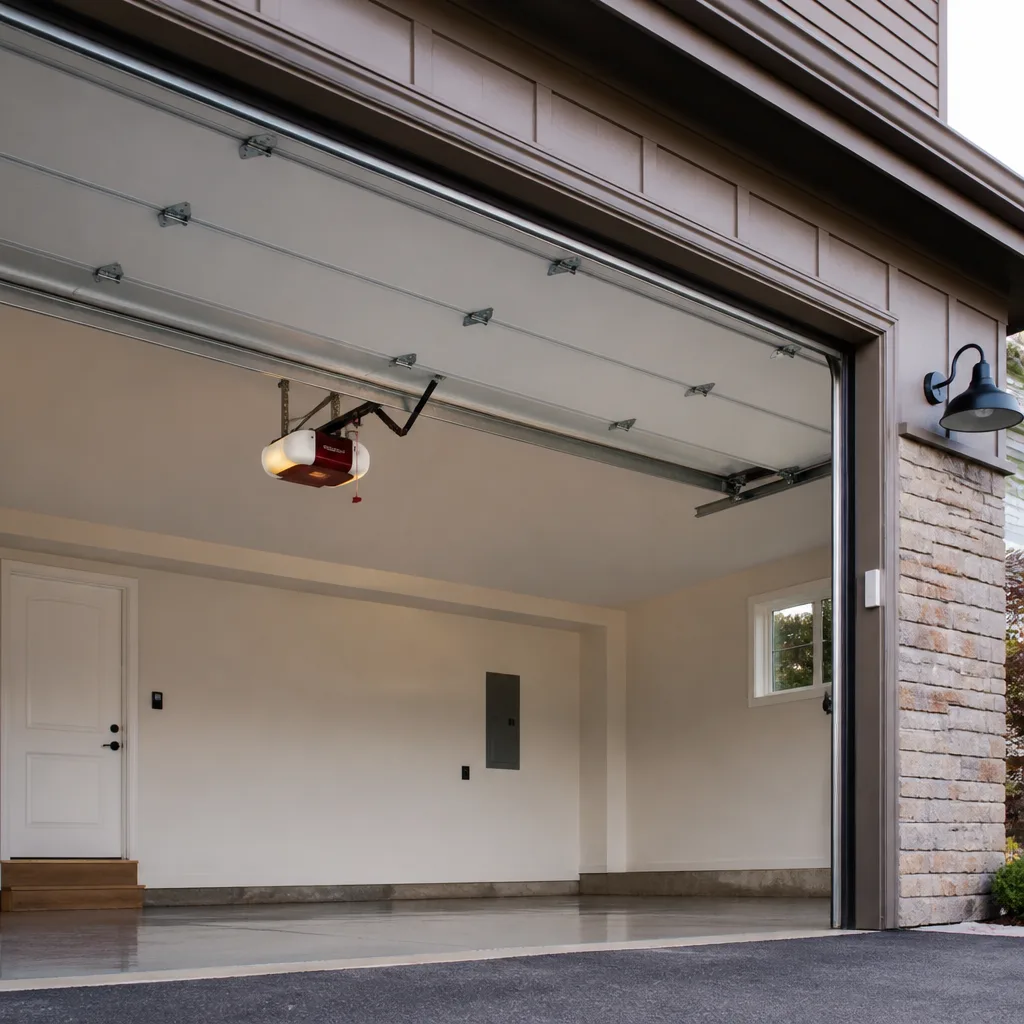 LiftMaster openers
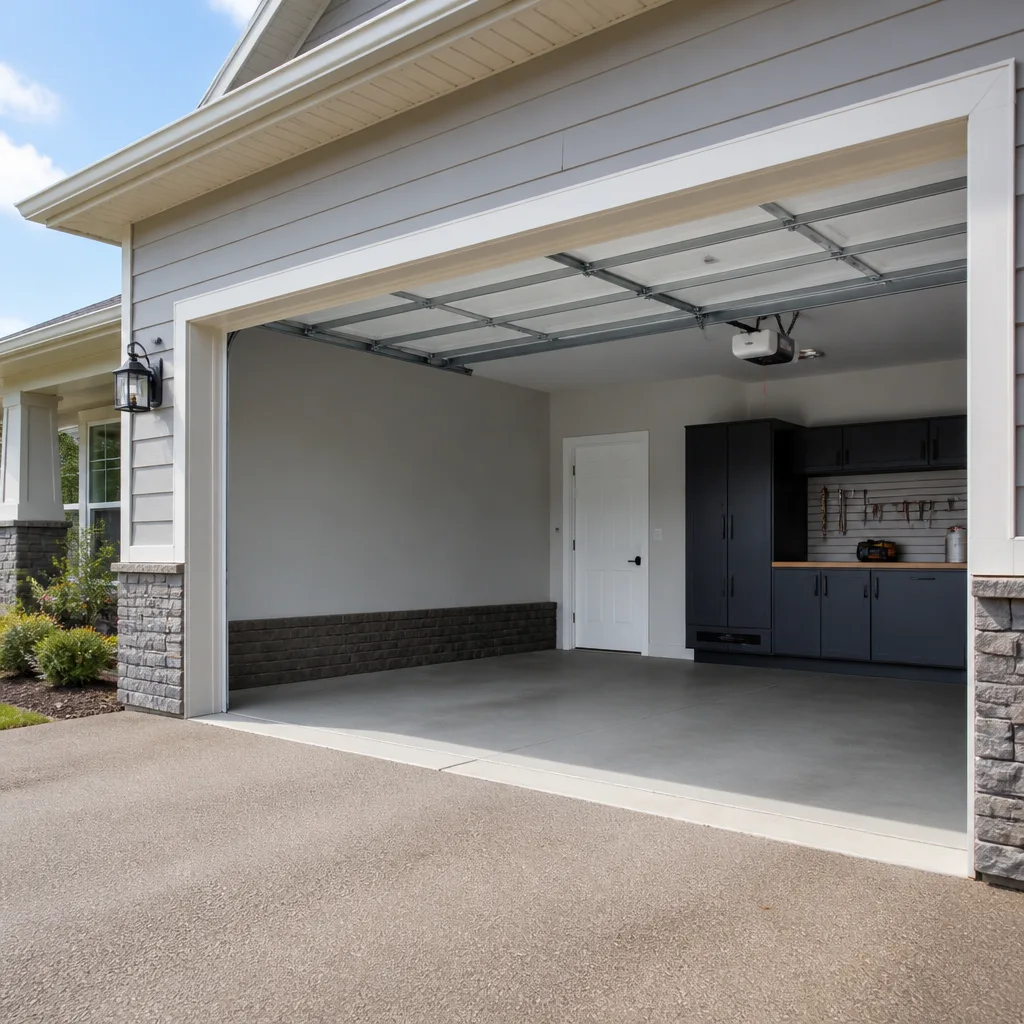 Chamberlain openers
Full 25-point door and opener safety check with every visit - springs, cables, rollers, tracks, and your LiftMaster or Chamberlain opener included
You get a price before we start. It does not change when the pro arrives.
Get your free estimateGarage Door Warning Signs: A Greenville Homeowner’s Reference Guide
Most homeowners call us describing a noise, not a part. “It’s making a grinding sound” can mean a dry bearing, a failing opener gear, or a roller that’s worn flat, and the fix for each is completely different. That’s the problem with garage door trouble: the door tells you something is wrong long before it stops working, but the signals are easy to misread. A popping sound gets ignored for weeks. A door that creeps up crooked gets a shove. Then one morning the whole thing quits. This guide translates the sounds, movements, and visual cues your door gives off into specific diagnoses and clear urgency levels, so you know what can wait for a scheduled repair in Greenville and what needs attention right now.
Quick Answer
The most common garage door warning signs are grinding or scraping noises, a door that moves unevenly or jerks, visible gaps in the panels or a sagging top section, and an opener that strains or reverses on its own. Grinding usually points to bearings or opener gears, scraping usually points to a misaligned track, and a door that reverses or feels too heavy almost always signals spring trouble. The single loudest warning is a popping or snapping sound followed by a door you can barely lift by hand: stop using the door and call a professional, because that’s a spring failure and it’s dangerous to address yourself.
Styles & brands we work with
- Raised-panel steel
- Carriage house
- Modern flush
- Full-view glass
- LiftMaster openers
- Chamberlain openers
Table of Contents
- The Sound Index: What Each Noise Is Telling You
- Visual Warning Signs, Ranked by Urgency
- The Balance Test and the Force Test
- How Greenville Humidity Creates Its Own Warning Signs
- When the Opener Is Covering for a Mechanical Problem
- Warning Signs by Brand and Age of System
- A Seasonal Checklist for Greenville Homeowners
The Sound Index: What Each Noise Is Telling You
A garage door is a mechanical system, and every noise it makes comes from a specific component under load. Once you can separate the sounds, you can describe the problem accurately, which is exactly what a technician needs to bring the right parts and get the door moving again quickly. Your garage door is your home’s largest moving part, so it’s worth understanding the vocabulary.
Grinding is metal-on-metal contact. Most often it comes from worn or dry bearings, a failing opener gear, or a roller that has seized and is dragging along the track instead of rolling. If the grinding starts the moment the opener engages, before the door has moved, the opener gearbox is the likely source. If it starts as the door travels, suspect the rollers or the torsion tube bearings.
Scraping sounds similar to grinding but has a softer, dragging quality. This usually points to a track that’s out of alignment, a bent track section, or a roller that has popped out of its channel. Scraping also shows up on doors that have shifted slightly in their frame, which happens as a house settles or as a track loosens from humidity-driven movement.
Popping or snapping is the one to take seriously. A single sharp pop, followed by a door that feels heavy or won’t move, is the sound of a torsion spring breaking. A rhythmic popping during operation can mean a cable jumping its drum. Both are stop-and-call situations.
Rattling is usually loose hardware: brackets, hinges, or opener rail bolts working themselves free. It’s rarely urgent, but it accelerates wear on everything attached to it.
Squealing is typically a dry hinge, a worn roller, or a torsion tube that needs lubrication. It’s the gentlest of the warning signs and tends to be the easiest to schedule before it turns into something worse.
Worn rollers are among the most common sources of all these noises, and a roll-up of what to listen for during a single open-and-close cycle will tell you more than a dozen guesses:
- Press the opener and listen before the door moves. Any grind at this stage is the opener itself.
- Listen as the door travels up. Rolling noise is normal; scraping or squealing is not.
- Listen as the door travels down and stops. A thump at the floor suggests track or travel-limit issues.
- With the door closed, try to move a roller by hand. Any wobble means the roller is failing.
Visual Warning Signs, Ranked by Urgency
If your door shows any of these signs, it’s worth ranking them by how fast they can become a safety problem. Some visual cues give you weeks to schedule a repair; others mean the door shouldn’t be used until it’s checked. Here’s how we think about urgency in Greenville and the surrounding neighborhoods, from the ones you can watch to the ones you shouldn’t wait on.
Watch and schedule (weeks, not days):
- Loose hinges or brackets that rattle but hold the door squarely.
- Cosmetic rust on the bottom panel or hardware, which is common in humid Greenville summers.
- A slightly noisy roller or a dry squeaking hinge.
- Worn weatherstripping at the bottom threshold.
Repair promptly (days):
- A track that’s visibly bent, dented, or pulled away from the wall.
- A door that rests unevenly on one side when closed.
- A gap in the panel seams that lets water or light through.
- A lifted or cracked top section that suggests the door is under strain.
Stop using the door (immediate):
- A visibly broken torsion spring (a clean gap in the coil).
- A frayed or loose cable hanging off its drum.
- A door that hangs off-level and won’t sit flush at rest.
- Any sign that a hinge or track fitting has torn loose from the door.
The spring and cable items are the ones to treat as hazards rather than inconveniences. Torsion springs hold tremendous stored energy, and a cable under tension can snap with serious force. Don’t try to adjust either yourself; a trained technician has the tools to release and replace them safely. If you’re in doubt about which category your issue falls into, garage door repair starts with an on-site assessment, and that’s the safest way to sort out a borderline case.
The Balance Test and the Force Test
Two quick checks tell you a lot about whether your springs and opener are working as designed, and neither one requires tools. They’re worth doing a few times a year, and they reveal hidden problems that don’t announce themselves with noise.
The Balance Test
- Close the door fully, then pull the release cord to disconnect the opener.
- Lift the door by hand to about waist height and let go.
- Watch what happens. A healthy door should hold its position or drift slowly. If it slams down, the springs are weak and the opener is doing work it shouldn’t. If it wants to keep rising, the springs are over-tensioned.
A door that fails the balance test is often within weeks of a spring problem. It’s also the fastest way to confirm spring weakness before you hear the pop that means a full break.
The Force Test
- Reconnect the opener and close the door.
- Hold a two-by-four flat on the floor across the door’s path, or hold your hand lightly against the bottom edge as it comes down.
- The door should reverse immediately on contact. If it keeps pushing or only reverses after a second, the opener’s force limit is set too high, and that’s a safety setting worth having adjusted.
A door that fails the force test can cause injury, and it also points to a deeper issue: an opener that’s been dialed up to compensate for a heavy door. That’s the exact pattern that shortens motor life, and it shows up often on older garage door opener repair calls throughout Greenville. The opener was turned up because the door got harder to move, and the real problem was never the opener at all.
How Greenville Humidity Creates Its Own Warning Signs
Greenville’s summers are humid, and that humidity leaves its mark on a garage door system in ways a dry-climate homeowner never sees. The signs here tend to show up as corrosion and swelling rather than cracking and sun damage, and it’s worth knowing the difference so you read your own door correctly.
The steel track and hardware sit in a space that’s shaded, poorly ventilated, and damp for stretches of the warm season. Over time, the rollers and hinges pick up surface rust that adds friction and turns a silent door into a squealing one. That friction then loads the opener, which is the downstream problem. Lubrication with the right product prevents most of it, but once rust has pitted a roller, replacement is the fix.
Wood doors respond differently. In Greenville’s humidity, wood panels can take on moisture and swell slightly, which can tighten a door in its frame and cause it to bind. If your door suddenly needs a shove in August that it didn’t need in April, humidity-driven swelling may be the cause. Steel and aluminum doors generally hold their dimensions better but rust at the bottom edge and around the fasteners.
Weatherstripping and bottom seals degrade faster in this climate too. A brittle or torn seal lets water in, which feeds the rust cycle. A quick check in spring and early fall catches most of it before it becomes a repair. If you’re noticing the combination of squealing, binding, and rust at the lower hardware, it’s a good sign you’re looking at humidity-driven wear and a straightforward fix.
When the Opener Is Covering for a Mechanical Problem
The most costly mistake we see is a homeowner who replaces an opener when the real problem is the door. An opener that’s failing is often not failing at all. It’s been working harder than it should because the door itself has gotten heavier, and the motor is finally giving out under the strain.
Here are the signs that your opener is compensating for a mechanical problem:
- The door moves slowly or hesitates at the start, especially in cold weather.
- The opener grinds or strains audibly on the way up but sounds normal on the way down.
- The motor housing gets noticeably warm to the touch after one cycle.
- The door reverses on closing for no visible reason, then works fine on a second try.
- The opener clicks but the door doesn’t move, then engages after a second.
Each of these points to a door that’s hard to lift, and a hard-to-lift door usually means weak springs, worn rollers, or a track that’s out of alignment. If you replace the opener without addressing the door, the new motor will wear out the same way. A technician who checks the door’s balance before touching the opener will find the real culprit. This is why we run the balance test first on nearly every service call. Replacing a worn opener makes sense once the mechanical side is healthy, not before.
The same logic applies to smart-home openers from LiftMaster and Chamberlain, and to legacy systems from Genie and Craftsman. A myQ opener that’s struggling doesn’t need a software reset; it needs the door it’s driving to be checked. Modern electronics are remarkably reliable. The mechanical load they’re pushing against is where the trouble usually lives.
Warning Signs by Brand and Age of System
Different manufacturers build in different failure points, and knowing your system’s brand helps narrow down what a given symptom means. Our technicians have up to 11 years of experience across the eight major brands, and the patterns are fairly consistent.
- LiftMaster and Chamberlain: These share much of their internal design, including the myQ smart-home ecosystem. Common signals are a wall control that loses connection, a safety sensor LED that flickers, or a travel limit that drifts. When the door itself is at fault, the opener shows it as a reversing issue rather than a grinding one.
- Genie: Older Genie units often develop gear wear in the opener head, which shows up as a grinding noise right at the start of travel. Screw-drive systems can also develop a rattle as the carriage wears.
- Craftsman: Very common on older Greenville homes. These units tend to give warning through slow response and remote range that fades before the motor quits.
- Clopay and Amarr: As door manufacturers, their panels and sections show wear through panel seams and bottom-edge rust in humid climates rather than opener symptoms. A sagging Clopay or Amarr panel is a door problem, not an opener problem.
If you’re not sure what brand you have, look at the opener head or the door’s bottom bracket for a label. That detail alone can save a technician a diagnostic step and get you a firmer estimate faster.
A Seasonal Checklist for Greenville Homeowners
A ten-minute check twice a year catches most of what this guide describes before it turns into a repair. Here’s what we suggest for homeowners around Greenville.
Spring and fall walkthrough:
- Run the door up and down once and listen for any new sound.
- Inspect the torsion spring for a visible gap in the coil.
- Check the rollers for wobble or flat spots.
- Look at the track for bends, and make sure it’s plumb and secured to the wall.
- Test the safety sensors by placing an object in the door’s path.
- Run the balance test with the opener disconnected.
- Wipe down the lower hardware and look for rust or moisture.
If any of these turn up a red-flag issue, that’s the moment to call. Catching a worn roller is an inexpensive repair; letting it wear through the track is not. The same goes for a spring that fails the balance test but hasn’t broken yet, which is the ideal time to replace it.
Common Mistakes to Avoid
- Assuming every noise is the opener. The opener gets blamed for grinding that’s actually coming from the door’s rollers or bearings. Running the balance test first saves you from replacing a motor that isn’t the problem.
- Spraying the tracks with lubricant. Lubricant on the tracks attracts dust and grit, which makes rollers drag. Lube the hinges and rollers, not the track surface.
- Adjusting a torsion spring yourself. This is the single most dangerous garage door component, and there’s no safe way to do it without the correct tools and training. Leave it to a technician.
- Ignoring a door that reverses on its own once. A door that reverses intermittently is often a sign of a failing spring or a sensor issue, and the problem grows if it’s left alone.
- Replacing panels to fix alignment. A crooked door is usually a track or hinge problem, not a panel problem. Replacing panels on a bent track just bends the new panels.
- Over-tightening the opener force setting. Turning the force up to get a heavy door moving is a stopgap that wears the motor out faster and disables a safety feature.
- Skipping a seasonal check in Greenville’s humid season. The corrosion and swelling that show up in summer are easier to manage when they’re caught early, not after the door stops responding.
See the difference
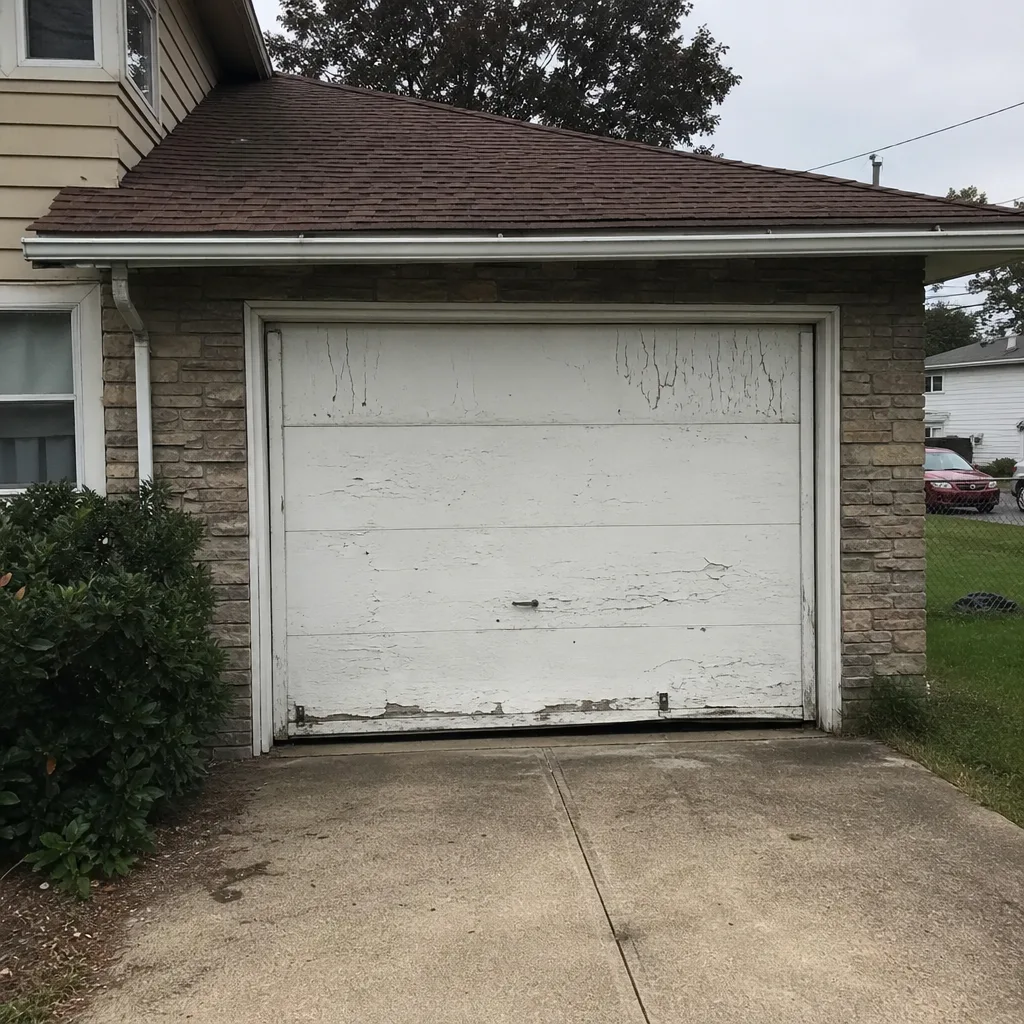 Before
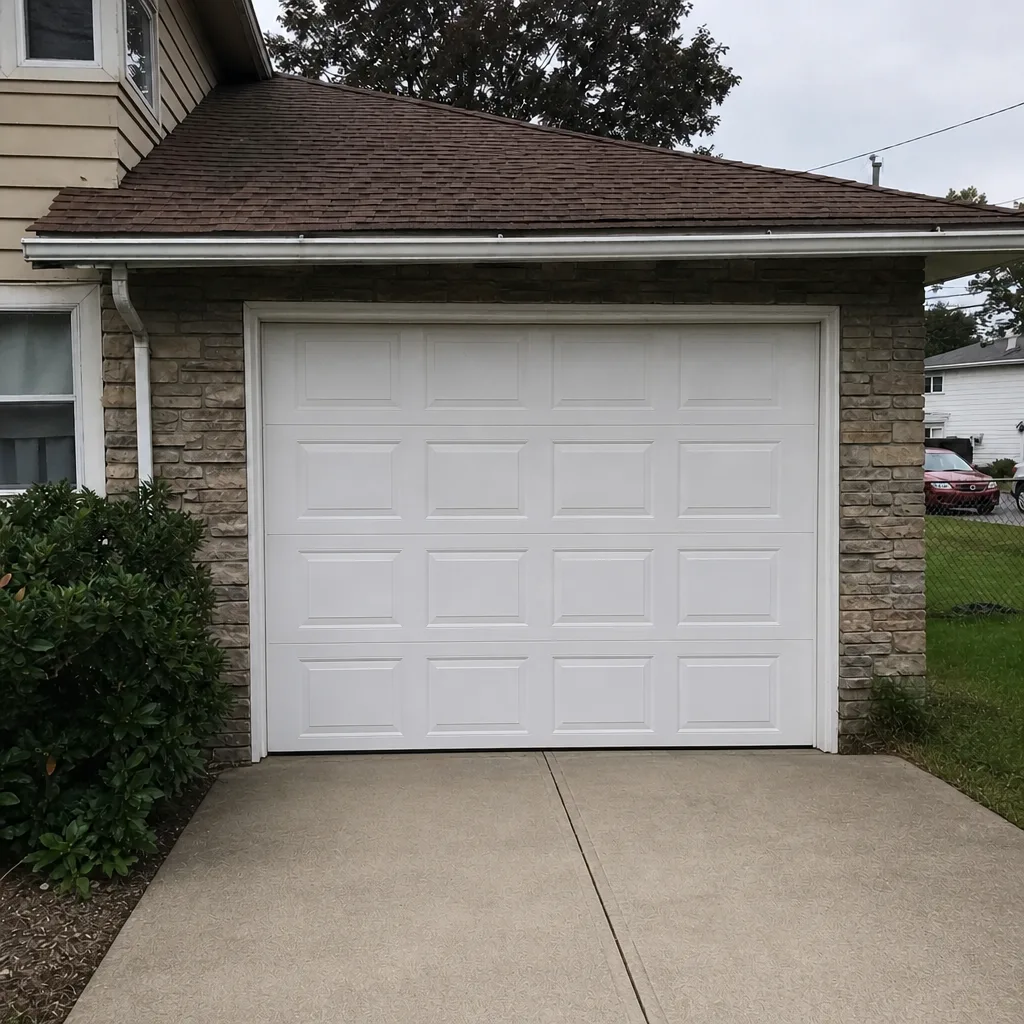 After
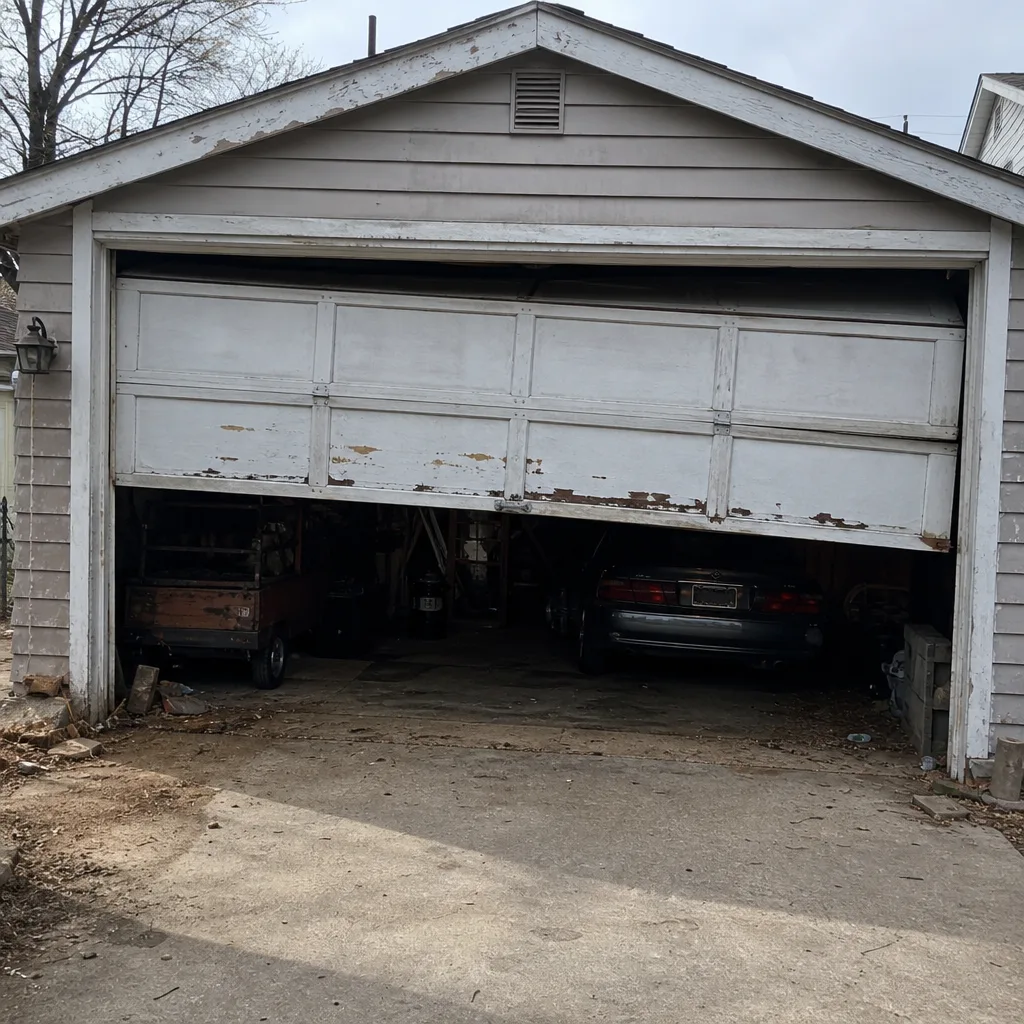 Before
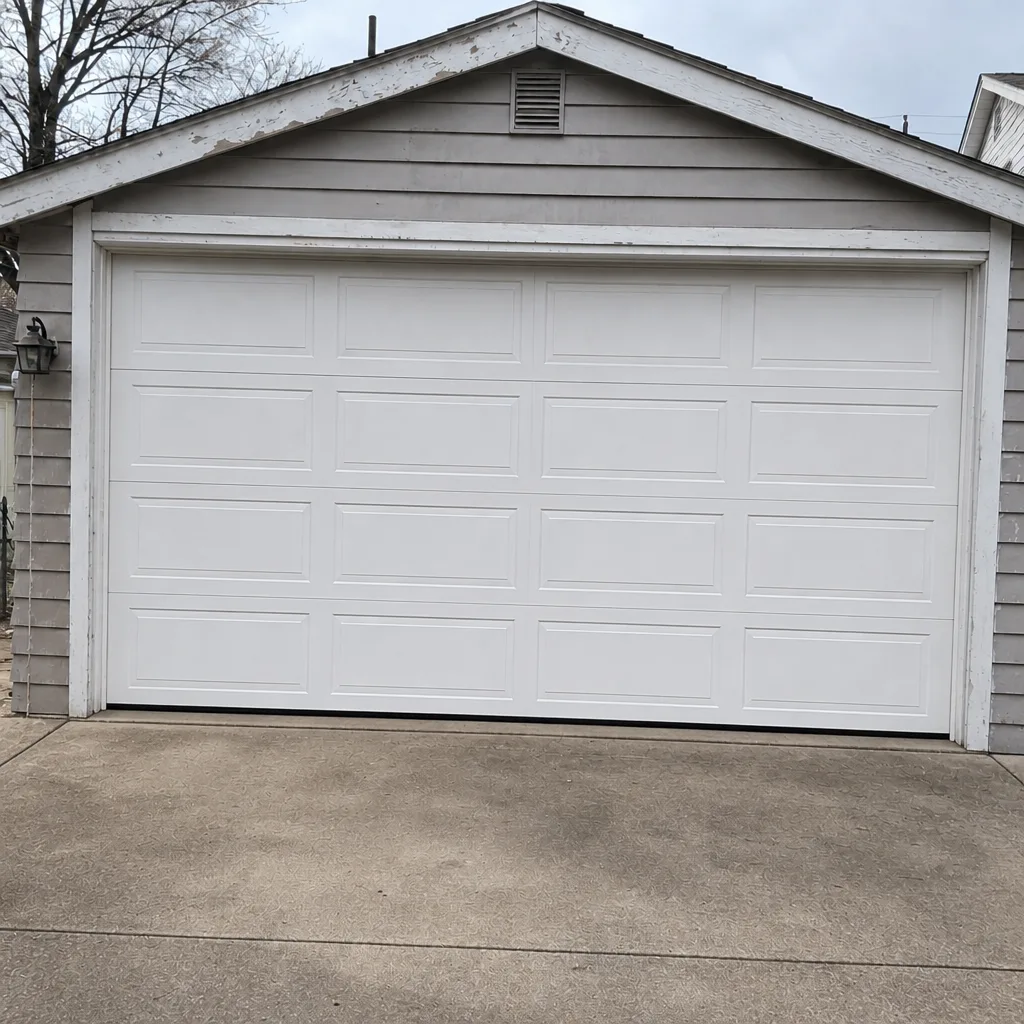 After
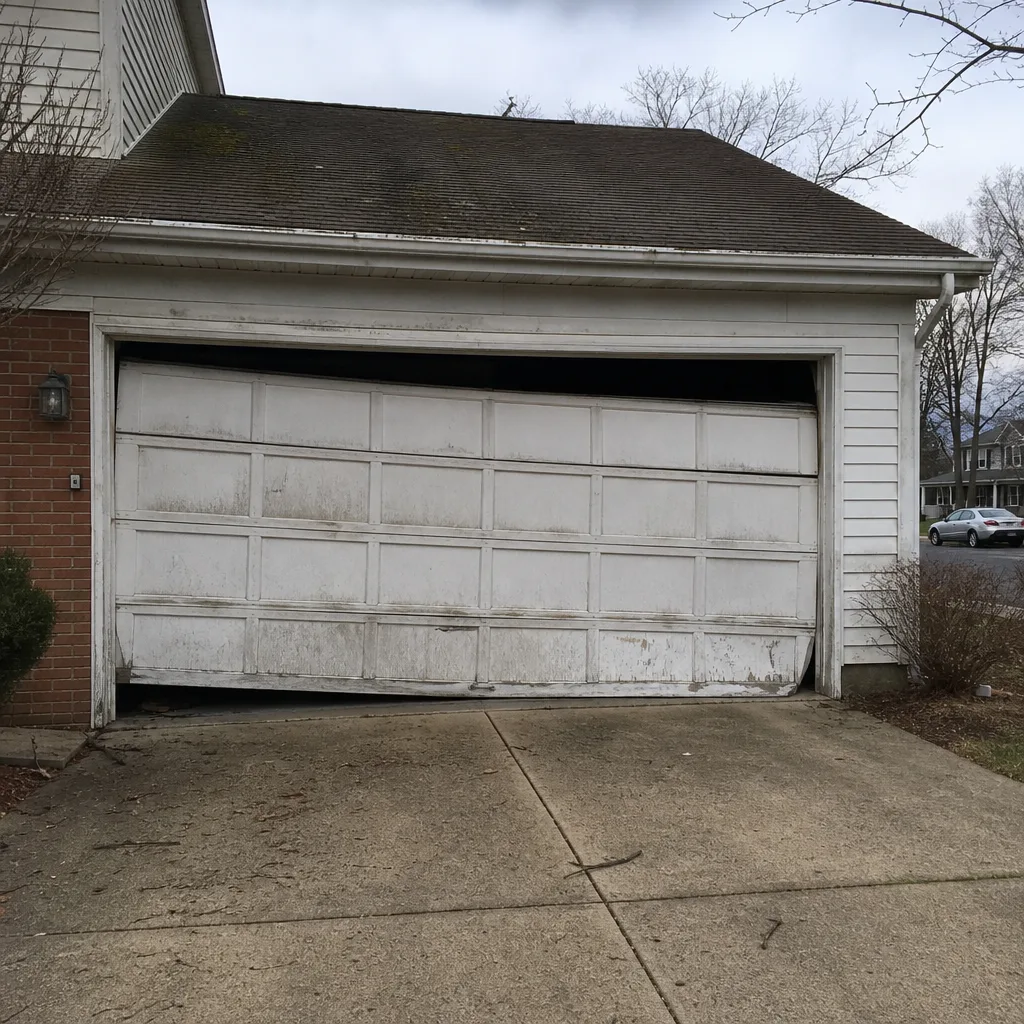 Before
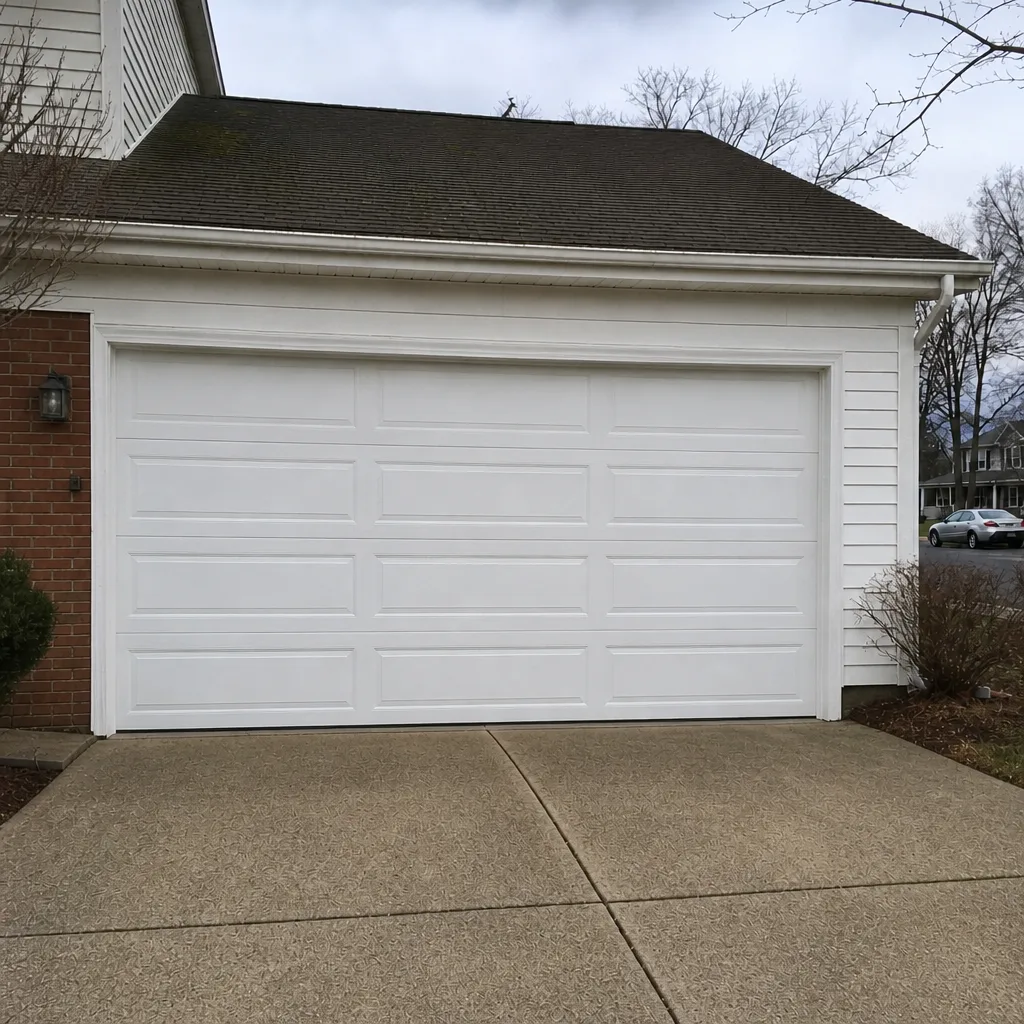 After
When to Call a Professional
Call a professional if your door pops or snaps and becomes hard to lift, if a spring shows a visible break, if a cable is loose or frayed, if the door reverses on its own or won’t sit flush, or if the opener is straining or getting hot. Those are the signals that point to a safety hazard or a component under high tension. Routine squeaks, rust on the lower hardware, and a slow roller are worth scheduling but rarely urgent. Greenville Garage Door Repair Pros offers free estimates in Greenville, and our team can diagnose spring, opener, track, and panel issues in one visit. Call (855) 706-3964 to schedule an assessment, and we’ll tell you plainly what needs fixing now and what can wait. We also handle full garage door installation when a door has reached the end of its service life, so one call covers both the diagnosis and the replacement if it comes to that.
Frequently Asked Questions
A popping or snapping sound followed by a door you can barely lift by hand is the most serious warning sign, because it usually means a torsion spring has broken. Stop using the door and call a professional. A visibly frayed or loose cable is the other immediate stop-use signal.
Yes. Grinding has a harder, metallic quality and comes from bearings or the opener gearbox; scraping is softer and dragging, and usually points to a track out of alignment or a roller off its channel. Listening to whether the noise starts before the door moves or during travel helps narrow it down. If your door is making grinding sounds in Greenville, call (855) 706-3964 for a free estimate and we’ll confirm what’s causing it.
Twice a year is a good rhythm in Greenville’s humid climate: once in spring before the damp season and once in fall. Humidity-driven rust and swelling tend to develop between those checks, so a quick inspection catches most issues early.
It can be either, which is why the balance test matters. If the door is hard to lift by hand with the opener disconnected, the springs are the problem and the opener is just reversing in response. If the door lifts easily, the safety sensors or the opener’s travel limits are the likely cause.
Not always. A torsion spring can break with a pop you hear across the house, or it can fail with little sound, especially if the door happens to be in a position where the break is less violent. Running the balance test is the reliable way to confirm a spring problem even when the noise was subtle.
That depends on what’s failing. Rust, worn rollers, and a misaligned track are usually repairable. A door with multiple cracked or sagging panels, widespread rust, or a failing bottom section is often better replaced, and we can price both so the decision is based on the numbers, not a guess. Call (855) 706-3964 for a free estimate before you decide.
The Bottom Line
Your garage door gives you notice before it fails, and the notice comes in the form of sounds, movement, and visual cues. Grinding points to bearings or the opener, scraping points to the track, and a pop followed by a heavy door points to a spring. The balance and force tests reveal what noise can’t, and Greenville’s humid climate adds corrosion and swelling to the list of things worth watching. Use the urgency ranking in this guide to sort what can wait from what can’t, then call a specialist who works on your door’s brand and treats the spring section with the respect it deserves. When something doesn’t sound right, Greenville Garage Door Repair Pros is a call away.
Frequently Asked Questions
A popping or snapping sound followed by a door you can barely lift by hand is the most serious warning sign, because it usually means a torsion spring has broken. Stop using the door and call a professional. A visibly frayed or loose cable is the other immediate stop-use signal.
Grinding has a harder, metallic quality and comes from bearings or the opener gearbox; scraping is softer and dragging, and usually points to a track out of alignment or a roller off its channel. Listening to whether the noise starts before the door moves or during travel helps narrow it down. If your door is making grinding sounds, call (855) 706-3964 for a free estimate and we’ll confirm the cause.
Twice a year is a good rhythm in Greenville’s humid climate: once in spring before the damp season and once in fall. Humidity-driven rust and swelling tend to develop between those checks, so a quick inspection catches most issues early.
It can be either, which is why the balance test matters. If the door is hard to lift by hand with the opener disconnected, the springs are the problem and the opener is just reversing in response. If the door lifts easily, the safety sensors or the opener’s travel limits are the likely cause.
Not always. A torsion spring can break with a pop you hear across the house, or it can fail with little sound, especially if the door happens to be in a position where the break is less violent. Running the balance test is the reliable way to confirm a spring problem even when the noise was subtle.
That depends on what’s failing. Rust, worn rollers, and a misaligned track are usually repairable. A door with multiple cracked or sagging panels, widespread rust, or a failing bottom section is often better replaced, and we can price both so the decision is based on the numbers, not a guess. Call (855) 706-3964 for a free estimate before you decide.
Written by the team at Greenville Garage Door Repair Pros.